



Anti-static and ESD (electrostatic discharge) equipment protects sensitive electronics from static damage by safely grounding people, work surfaces, and tools, and by neutralizing charges that can't be grounded. Penn Tool Co. stocks complete ESD control products for electronics assembly, repair benches, labs, and cleanrooms, including wrist straps, grounding cords and shoe straps, ESD work kits and table mats, air ionizers, monitors and testers, and anti-static packaging.
ESD Protection at a Glance
- What it is: Equipment that prevents static charge from building up and discharging into electrostatic-sensitive devices (ESDs) such as circuit boards, chips, and sensors.
- Why it matters: Many electronic components can be damaged by discharges far below the roughly 3,000 volts a person can feel, so damage often goes unnoticed until a part fails.
- Core products: Wrist straps, grounding cords, ESD mats, heel and shoe grounders, air ionizers, testers, and static shielding packaging.
- Key standards: ANSI/ESD S20.20 (U.S.) and IEC 61340-5-1 (international) define ESD control programs; ANSI/ESD S541 covers ESD packaging.
- Where it's used: Electronics manufacturing, repair benches, labs, data centers, aerospace, and cleanrooms.
What Is ESD and Why Does It Damage Electronics?
Electrostatic discharge (ESD) is the sudden flow of static electricity between two objects at different electrical potentials, such as a charged person touching a circuit board. A discharge too small to feel can still weaken or destroy semiconductor junctions. Some damage is immediate, while "latent" damage degrades a component so it fails later in the field. An ESD control program prevents this by grounding everything that can be grounded and neutralizing charges on everything that can't.
Types of Anti-Static & ESD Equipment
Wrist Straps, Grounding Cords & Shoe Straps
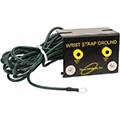
A wrist strap is the primary personal ESD protection for seated workers. It connects the wearer's skin to ground through a coiled cord with a built-in current-limiting resistor (typically 1 megohm) for user safety. Heel grounders and shoe straps ground workers who stand or move, working together with ESD flooring. Shop grounding cords, wrist and shoe straps.
ESD Work Kits & Table Mats
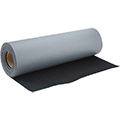
Static-dissipative table mats give you a grounded work surface that slowly and safely drains charge from parts and tools placed on them. Field service kits combine a portable mat, wrist strap, and ground cord for on-site repairs. Shop ESD work kits and table mats.
Air Ionizers
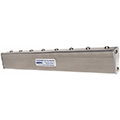
Insulators such as plastic housings, tape, and packaging can't be grounded. Air ionizers neutralize static on these materials by blowing a balanced stream of positive and negative ions across the work area. Shop air ionizers.
Monitors & Testers
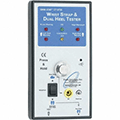
Wrist strap and footwear testers verify grounding at the start of each shift, while continuous monitors alarm the moment a wrist strap or work surface connection fails. Regular testing is a core requirement of ANSI/ESD S20.20 programs. Shop anti-static monitors and testers.
Anti-Static Packaging
Not all "anti-static" packaging protects the same way. Pink poly (low-charging) bags reduce charge buildup but don't block external discharges. Metallized static shielding bags create a Faraday-cage effect that protects contents from outside ESD events, making them the right choice for storing and shipping sensitive boards and components. Shop anti-static packaging.
Anti-Static & Cleanroom Paper
Low-lint, low-particulate anti-static papers are made for cleanrooms and ESD-protected areas, where ordinary paper can shed particles and generate static. Shop anti-static and cleanroom paper and anti-static accessories.
Conductive vs. Dissipative vs. Insulative Materials
| Material Type | Surface Resistance (ANSI/ESD S541) | How It Behaves | Typical Use |
|---|---|---|---|
| Conductive | Less than 1 x 10⁴ ohms | Moves charge very quickly | Shielding layers, grounding hardware |
| Static dissipative | 1 x 10⁴ to less than 1 x 10¹¹ ohms | Drains charge slowly and safely | ESD mats, work surfaces, trays |
| Insulative | 1 x 10¹¹ ohms or more | Holds charge; can't be grounded | Avoid near sensitive parts, or neutralize with an ionizer |
How to Build an ESD-Safe Workstation
- Ground the work surface: Cover the bench with a static-dissipative mat connected to a common ground point.
- Ground the operator: Use a wrist strap for seated work, and heel or shoe grounders with ESD flooring for standing or mobile work.
- Neutralize insulators: Remove unnecessary plastics from the area and use an air ionizer for items that must stay.
- Test daily: Check wrist straps and footwear before each shift, or install a continuous monitor.
- Package correctly: Store and transport sensitive parts in static shielding bags or containers.
- Mark the area: Label your ESD Protected Area (EPA) so everyone entering follows the rules.
About Penn Tool Co.
Since 1968, Penn Tool Co., Inc. has supplied industrial tools and safety products to manufacturers, technicians, and government buyers nationwide. The family-owned company is based in Maplewood, New Jersey, holds GSA Contract GS-06F-0042S, and carries ESD protection products from brands including Value Collection, PRO-SAFE, and Kinetronics.
Penn Tool Co. offers a Price Match Guarantee and nationwide shipping. For help outfitting an ESD workstation or a volume quote, call 800-526-4956 or request a quote.
Frequently Asked Questions
What is anti-static ESD equipment?
Anti-static ESD equipment prevents electrostatic discharge from damaging electronic components. It includes wrist straps, grounding cords, dissipative mats, heel grounders, air ionizers, testers, and static shielding packaging that ground people and surfaces or neutralize static charge.
How does an ESD wrist strap work?
An ESD wrist strap keeps your body at ground potential by connecting your skin to a grounding point through a coiled cord. A built-in resistor, typically 1 megohm, limits current for safety while letting static charge drain away continuously.
Do I need an ESD mat if I wear a wrist strap?
Yes, in most cases. A wrist strap grounds you, but not the parts and tools on your bench. A grounded static-dissipative mat drains charge from items on the work surface, so both are used together in an ESD-safe workstation.
What is the difference between anti-static and static shielding bags?
Anti-static (pink poly) bags are low-charging, so they don't build up much static themselves, but they don't block outside discharges. Static shielding bags have a metallized layer that protects contents from external ESD, making them better for sensitive components.
What does an air ionizer do for ESD control?
An air ionizer neutralizes static charge on insulating materials, such as plastics and packaging, that can't be grounded. It releases balanced positive and negative ions that combine with and cancel out charges on nearby surfaces.
How often should ESD wrist straps be tested?
Most ESD programs test wrist straps at least once per shift before work begins, using a wrist strap tester. Continuous monitors offer real-time checking and alert the operator immediately if the grounding connection fails.
What is ANSI/ESD S20.20?
ANSI/ESD S20.20 is the U.S. standard for developing an ESD control program to protect electronic parts, assemblies, and equipment. It sets requirements for grounding, personnel, work surfaces, packaging, training, and compliance verification. IEC 61340-5-1 is the international equivalent.
What is the difference between conductive and static dissipative materials?
Conductive materials have very low resistance and move charge quickly. Static dissipative materials have higher resistance and drain charge slowly, which prevents a sudden spark. Dissipative materials are preferred for work surfaces that sensitive parts touch.
Where can I buy anti-static ESD equipment online?
Penn Tool Co. sells anti-static and ESD equipment online, including wrist straps, grounding cords, mats, ionizers, testers, and static shielding packaging, with nationwide shipping. The Maplewood, NJ supplier has served industry since 1968 and is a GSA contract holder.


