
Precision in Every Pass: Boring Heads & Accessories at Penn Tool Co.
Since 1968, Penn Tool Co. has been the go-to source for machinists and engineers across the United States who know that high-tolerance work takes more than a steady hand; it demands the right equipment. Whether you're finishing a critical aerospace component or a custom engine block, our boring tools deliver the rigidity and adjustment accuracy that complex milling operations require.
Boring heads let you bore precise hole diameters on manual mills and CNC machining centers by offsetting a boring bar from the spindle centerline in small, measured steps. Explore our range of boring heads, complete boring head sets, arbors, shanks and adapters, and boring head accessories, selected to turn your milling machine into a high-precision boring center.
Boring Heads at a Glance
- What a boring head does: Holds a boring bar in an adjustable slide so you can bore holes to an exact diameter on a mill.
- Common head sizes: Often described by body diameter, such as 2", 3", and 4". Larger heads accept larger boring bars and bore larger holes.
- Common shanks: R8, Morse taper, CAT40, BT, NMTB, and straight shanks, often interchangeable on the same head.
- What a set includes: Typically a boring head, a shank, a set of boring bars, and wrenches in a fitted case.
- Typical adjustment: Many heads change the bore diameter by .001" per dial graduation; micro and precision heads offer finer increments.
Engineered for Absolute Accuracy
Achieving the perfect bore is a balance of tool geometry, machine stability, and micro-adjustability. Our inventory supports every stage of the boring process, from roughing out material to the final finishing pass.
For standard shop tasks, our boring heads for milling machines and adjustable boring heads make diameter changes quick and reliable. When your work demands extreme repeatability, precision boring heads and micro boring head sets provide the fine adjustment needed to hold tight tolerances consistently. For high-production environments, indexable boring head kits use replaceable carbide inserts, reducing downtime compared to traditional brazed tooling.
Beyond the heads themselves, we stock a full array of boring head arbors and accessories for seamless integration with your existing spindles. Whether you need CNC boring head tools for automated machining centers or heavy-duty boring heads for large-scale material removal, we offer boring head tooling for milling that stands up to the rigors of modern manufacturing.
Explore our broader Tooling and Accessories category for high-performance adapters, arbors, and machine attachments essential for any precision shop setup.
Shop by Category
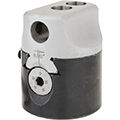
Boring Heads
Standalone boring heads for manual knee mills and CNC machining centers. Choose by body size, bore range, bar hole size, and how the head mounts to its shank.
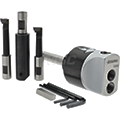
Boring Head Sets
Boring head sets bundle the head, a shank, a range of boring bars, and wrenches, usually in a fitted case. They're the fastest way to start boring on a new mill and typically cost less than buying each piece separately.
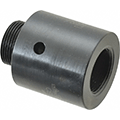
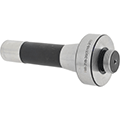
Boring Head Arbors, Shanks & Adapters
Arbors, shanks and adapters mount the boring head to your machine spindle. Because many heads attach with a threaded mount, swapping the shank lets one head move between an R8 knee mill and a CAT40 CNC machine.
Boring Head Accessories
Boring head accessories include boring bars, reducer bushings, wrenches, and replacement screws that keep your head running and extend its range.
Boring Head Shank Types
| Shank | Common Machines | Notes |
|---|---|---|
| R8 | Bridgeport-style manual knee mills | Held by the mill's drawbar; the most common shank for manual milling |
| Morse Taper (MT) | Mill-drills, drill presses, some older mills | Drawbar-threaded versions are recommended for side loads |
| CAT40 / BT40 | CNC machining centers | Use the correct retention knob; CAT and BT are not interchangeable |
| NMTB | Older horizontal and vertical mills | Steep taper similar in form to CAT but with different flange details |
| Straight shank | Mills with collet chucks or end mill holders | Flexible, but rigidity depends on the holder |
Boring Bars for Boring Heads
Boring heads use small boring bars with a round shank that fits the head's bar holes. Brazed carbide bars are the most common choice for steel and cast iron. High-speed steel (HSS) bars can be resharpened and work well in aluminum and softer materials. Indexable bars use replaceable carbide inserts for consistent results in production. For best rigidity, use the largest-diameter, shortest bar that fits the bore.
How to Use a Boring Head
- Drill a starter hole: Drill or rough the hole close to size, leaving enough stock for the boring bar to clean up.
- Mount the head and bar: Install the head and shank in the spindle, insert the boring bar, and orient its cutting edge correctly for the spindle direction.
- Set the offset: Loosen the slide lock screw, turn the dial to move the bar outward, then retighten the lock.
- Choose the speed: Use a lower RPM for larger diameters and for heads that are offset far from center, since the head becomes more unbalanced.
- Take a test cut: Feed down a short distance, retract, and measure the bore with a bore gage, telescoping gage, or inside micrometer.
- Adjust and finish: Calculate the remaining stock, adjust the dial, and finish with a light final pass for best size and surface finish.
How to Choose a Boring Head
- Bore range: Confirm the head's minimum and maximum boring diameters cover your work.
- Machine fit: Pick a shank that matches your spindle (R8, MT, CAT40, BT, NMTB, or straight).
- Head size: Larger heads are more rigid and bore bigger holes, but need more spindle clearance and lower speeds.
- Adjustment precision: Standard heads suit general work; micro and precision boring heads give finer increments for tight tolerances.
- Dial reading: Check whether graduations read on diameter or radius and the size of each increment.
- Bar type: Choose brazed, HSS, or indexable bars, and match them to the head's bar holes or plan for reducer bushings.
- Set vs. individual: A set is the most economical way to start; individual components let you expand later.
Trends in Precision Boring Technology
The machining landscape is shifting toward smarter, more connected tools that reduce human error and maximize material yield.
- Digital integration: Boring heads with built-in digital readouts show each adjustment directly on the head, making settings easier to verify and speeding up setup.
- Modular tooling systems: Modular boring head arbors let machinists swap between head sizes while keeping the same shank, improving shop-floor flexibility.
- Vibration dampening: Damped boring bars use internal damping systems to reduce chatter in deep-hole work, producing better surface finishes even at long overhangs.
- Indexable efficiency: Shops continue to move from brazed tools to indexable boring head kits, as multi-coated inserts allow higher cutting speeds and better heat resistance in hardened alloys.
By partnering with trusted brands like Precise, Value Collection, and STM, Penn Tool Co. keeps your shop equipped with proven advancements in hole-finishing technology.
Running bars on a lathe instead? See boring bar holders and adapters, boring bar sleeves, and reducing adapters, or browse all tool holding.
Master Your Machine: The Penn Tool Co. Advantage
The quality of your output reflects the tools you use. By bringing professional boring heads and accessories into your workflow, you're not just completing a job; you're upholding a standard of excellence.
Penn Tool Co., Inc. is a family-owned industrial supplier serving machinists, manufacturers, maintenance teams, and government buyers across the United States since 1968. With more than 500,000 products, a GSA Contract (GS-06F-0042S), a Price Match Guarantee, and fast nationwide delivery, we're a partner dedicated to your shop's success, helping make every bore as precise as the blueprint demands.
Need help choosing a boring head for your mill or a volume quote? Call 800-526-4956 or request a quote.
Frequently Asked Questions
How do you use a boring head on a milling machine?
Drill a starter hole, mount the boring head and bar in the spindle, and set a small offset with the dial. Take a test cut, measure the bore, adjust the offset for the remaining stock, and finish with a light final pass.
What size boring head do I need?
Choose a head whose bore range covers your typical hole sizes and whose shank fits your spindle. A 2" head suits small mills and smaller bores, while 3" and 4" heads offer more rigidity and larger bore ranges for bigger mills.
What is the difference between a standard and a micro boring head?
A standard boring head adjusts in increments suited to general shop work, often .001" on diameter. A micro or precision boring head offers much finer adjustment, typically using a vernier or fine-pitch dial, for holding tight tolerances repeatably.
What comes in a boring head set?
A boring head set typically includes a boring head, a shank to fit your machine, a set of boring bars in assorted sizes, and wrenches, usually in a fitted case. Contents vary, so check each set's list before ordering.
What is an R8 boring head?
An R8 boring head has, or mounts on, an R8 shank that fits the spindle of Bridgeport-style knee mills. It's held in place by the mill's drawbar and is the most common boring head setup for manual milling.
Can I use one boring head on different machines?
Often, yes. Many boring heads attach to their shank with a threaded mount, so you can switch between R8, Morse taper, CAT40, or straight shanks and move the same head between machines.
What RPM should I run a boring head at?
Base the speed on the bore diameter and material, then reduce it as the head is offset farther from center, because an offset head is unbalanced. Large heads at large offsets should run at noticeably lower RPM.
What boring bars work with a boring head?
Boring heads use round-shank boring bars that fit their bar holes. Brazed carbide bars are common for steel and cast iron, HSS bars can be resharpened for softer materials, and indexable bars use replaceable inserts.
Why does my boring head chatter?
Chatter usually comes from too much bar overhang, too high an RPM, a loose slide lock, a dull or incorrectly ground bar, or a non-rigid setup. Use the largest, shortest bar possible, slow down, and lock the slide after every adjustment.
Where can I buy boring heads online in the USA?
Penn Tool Co. sells boring heads, boring head sets, shanks, arbors, adapters, and accessories online, with fast shipping across the United States. A family-owned supplier to machinists since 1968, Penn Tool Co. is also a GSA contract holder.


