
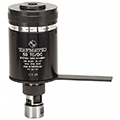
Tool holding is the link between your machine and your cutting tool. A toolholder grips the cutter, locates it accurately in the spindle or turret, and transmits torque, so its rigidity and runout directly affect surface finish, hole accuracy, and tool life. Penn Tool Co. stocks tool holding for mills, lathes, drill presses, and CNC machining centers, including collets and closers, drill chucks, boring heads, arbors, Morse taper sleeves, lathe tool posts, tapping heads, and die holders.
Tool Holding at a Glance
- What it is: Devices that hold cutting tools securely and accurately in a machine spindle, tailstock, or tool post.
- Main types: Collets, drill chucks, end mill and shell mill holders, arbors, boring heads, taper sleeves, tool posts, tapping heads, and die holders.
- Common spindle tapers: CAT and BT (7/24 taper) for CNC mills, HSK for high-speed machining, R8 for manual knee mills, and Morse taper for drill presses, lathes, and tailstocks.
- Common collet systems: ER collets for milling and CNC, 5C collets for lathes and fixtures, and R8 collets for manual mills.
- Why it matters: Lower runout gives better surface finish, more accurate holes, and longer tool life.
Types of Tool Holding
Collets, Closers & Accessories
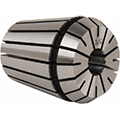
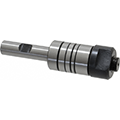
Collets are slotted sleeves that close evenly around a tool shank or workpiece for concentric, high-grip holding. ER collets (DIN 6499 / ISO 15488) each collapse about 1 mm (.04"), so a set covers a wide range of shank sizes in milling and CNC work. 5C collets are standard for lathes, collet chucks, and indexers, with capacity up to 1-1/16" round. R8 collets fit Bridgeport-style knee mills. Collet closers and wrenches complete the system. Shop collets, closers and accessories.
Drill Chucks, Holders & Accessories
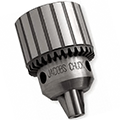
Drill chucks hold straight-shank drills and other round-shank tools. Keyed chucks give maximum grip, while keyless chucks allow fast, tool-free changes. Chucks typically mount on an arbor using a Jacobs taper, with a Morse, R8, or straight shank on the machine side. Shop drill chucks, holders and accessories.
Boring Heads & Bar Holders
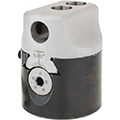
A boring head lets you bore precise hole diameters on a mill by offsetting a boring bar a measured amount from the spindle centerline. It's the go-to tool for sizing bores that are too large or too precise for a drill or reamer. Bar holders hold boring bars on lathes and in boring heads. Shop boring heads and bar holders.
Machine Tool Arbors & Accessories
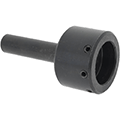
Arbors mount cutters that have a bore rather than a shank, including shell mills, face mills, slitting saws, and side-milling cutters, as well as drill chucks. Shop machine tool arbors and accessories.
Morse Taper Sleeves & Sockets
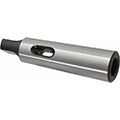
Morse tapers (MT1 through MT7) are self-holding tapers used on drill presses, lathe spindles, and tailstocks. A sleeve adapts a smaller taper shank to a larger spindle bore, while a socket adapts a larger shank to a smaller bore or extends reach. Drift keys remove tools from the taper. Shop Morse taper sleeves and sockets.
Lathe Tool Posts & Tool Holders
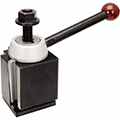
Quick-change tool posts let you swap pre-set turning, boring, threading, and parting tools in seconds without re-setting center height. They're sized to the lathe's swing, in series such as AXA, BXA, and CXA. Shop lathe tool posts and tool holders.
Tapping Heads & Holders
Tapping heads and tap holders drive taps on drill presses, mills, and CNC machines. Self-reversing tapping heads back the tap out automatically, and tension/compression holders allow axial float to compensate for small feed mismatches and reduce tap breakage. Shop tapping heads and holders.
Die Holders, Rotary Tool Holders & Accessories
Die holders hold round threading dies square to the work, often mounted in a lathe tailstock for straight, accurate external threads. Rotary tool holders and accessories round out setups for rotating tools. Shop die holders and rotary tool holders.
Spindle Taper Comparison
| Taper | Type | Common Machines | Notes |
|---|---|---|---|
| CAT (CAT30, CAT40, CAT50) | 7/24 steep taper, V-flange | CNC machining centers (common in North America) | Inch-threaded retention knob |
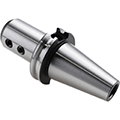
| BT (BT30, BT40, BT50) | 7/24 steep taper, V-flange | CNC machining centers (common in Asia and Europe) | Metric retention knob; not interchangeable with CAT |
| HSK | Hollow short taper | High-speed CNC machining | Taper and face contact for high rigidity at high RPM |
| R8 | Short taper with drawbar | Manual knee mills (Bridgeport style) | Uses R8 collets and R8-shank holders |
| Morse Taper (MT1 to MT7) | Self-holding taper | Drill presses, lathe spindles, tailstocks | Held by friction; removed with a drift |
How to Choose Tool Holding
- Match the machine interface: Confirm your spindle taper (CAT, BT, HSK, R8, or Morse) and size. CAT and BT holders look similar but are not interchangeable.
- Match the tool shank: Use the right collet size, chuck capacity, or holder bore for your cutter's shank or arbor.
- Minimize runout: Precision collet, shrink-fit, and hydraulic holders keep runout low for better finish and tool life, especially with small end mills and drills.
- Consider rigidity and reach: Use the shortest holder that reaches the feature; longer gauge lengths increase deflection and chatter.
- Check balance for high RPM: Holders run at high spindle speeds should be balanced to the rated speed.
- Keep it clean: Wipe tapers and collets before each use; chips and dirt on mating surfaces are a common cause of runout.
About Penn Tool Co.
Since 1968, Penn Tool Co., Inc. has supplied machinists, manufacturers, and government buyers with metalworking tools and precision instruments. The family-owned company is based in Maplewood, New Jersey, and holds GSA Contract GS-06F-0042S.
Penn Tool Co. offers a Price Match Guarantee and nationwide shipping. For help matching tool holding to your machine or a volume quote, call 800-526-4956 or request a quote.
Frequently Asked Questions
What is a toolholder?
A toolholder is a device that holds a cutting tool in a machine spindle, turret, or tool post. It locates the tool accurately, grips it securely, and transmits cutting torque. Common types include collet chucks, drill chucks, end mill holders, arbors, and boring heads.
What is the difference between CAT and BT toolholders?
CAT and BT toolholders both use a 7/24 steep taper with a V-flange, but they differ in flange dimensions and retention knob threads. CAT uses inch threads and is common in North America; BT uses metric threads. They are not interchangeable.
What is the difference between ER and 5C collets?
ER collets are spring collets with a wide clamping range of about 1 mm each, used mainly for holding tools in milling and CNC machines. 5C collets are draw-in collets used mainly on lathes and fixtures for holding workpieces, with capacity up to 1-1/16" round.
What is an R8 collet used for?
An R8 collet holds tools directly in the spindle of manual knee mills, such as Bridgeport-style mills. A drawbar pulls the collet into the R8 taper to clamp end mills, drill chuck arbors, and other R8-shank tooling.
What is a Morse taper sleeve used for?
A Morse taper sleeve adapts a tool with a smaller Morse taper shank to fit a larger Morse taper spindle or tailstock bore, for example fitting an MT2 drill into an MT3 spindle. A socket does the reverse or adds reach.
What does a boring head do?
A boring head mounts in a mill spindle and offsets a boring bar from the spindle centerline by a precise, adjustable amount. This lets machinists bore holes to exact diameters, especially sizes too large or too precise for drills and reamers.
What is a quick-change tool post?
A quick-change tool post mounts on a lathe compound and holds interchangeable tool holders that are pre-set for height. Machinists can swap turning, boring, threading, and parting tools in seconds. Sizes such as AXA, BXA, and CXA match different lathe swings.
What causes runout in a toolholder?
Runout is usually caused by dirt or chips on the taper or collet, worn or damaged collets, a worn spindle taper, improper collet nut torque, or low-precision holders. Cleaning mating surfaces and using precision collets and holders reduce runout.
What is a self-reversing tapping head?
A self-reversing tapping head drives a tap forward into the hole and then automatically reverses to back it out when the machine spindle retracts. This lets drill presses and mills tap holes quickly without reversing the spindle.
Where can I buy tool holding online?
Penn Tool Co. sells tool holding online, including collets, drill chucks, boring heads, arbors, Morse taper sleeves, lathe tool posts, tapping heads, and die holders, with nationwide shipping. The Maplewood, NJ supplier has served machinists since 1968 and is a GSA contract holder.


