How to Choose the Right Abrasive Disc for Metalworking Applications
How to Choose the Right Abrasive Disc for Metalworking Applications

In the world of metal fabrication, choosing the right abrasive disc can feel a bit like selecting the right seasoning for a gourmet meal. Get it right, and the results are seamless; get it wrong, and you’re left with a mess that requires a lot of "re-work" to fix. Whether you are managing a high-volume production floor or specifying tools for a specialized machine shop, the abrasive disc is the critical interface between your equipment and your finished product.
Precision in metalworking isn't just about the tolerances held by your CNC machine; it’s about the surface integrity, the speed of material removal, and the safety of the operator. In this guide, we will explore how to confidently navigate the complex world of abrasive discs for metalworking, ensuring you select the right tool for the job every time you hit the "start" button.
Why Abrasive Selection is a Business Priority
For North American manufacturers, the "bottom line" is often dictated by throughput and consumable costs. It is a common mistake to view sanding discs or grinding discs as mere commodities. However, an ill-suited abrasive doesn't just wear out faster; it can overheat the workpiece (causing metallurgical damage), increase operator fatigue, and lead to costly secondary finishing steps.
As metal finishing abrasives have evolved, the gap between "standard" and "high-performance" has widened. A well-matched abrasive disc improves cycle times, enhances safety, and ensures that the final product meets the rigorous standards required in industries ranging from aerospace to automotive fabrication. At Penn Tool Co., we’ve seen how the right abrasive strategy can transform a shop's productivity from "just getting by" to "industry-leading."
1. Understand Your Abrasive Materials
The first step in selection is understanding the "grit" behind the performance. The grain type determines how the disc cuts and how long it lasts.
- Aluminum Oxide (AO): The industry workhorse. It is versatile and cost-effective, ideal for carbon steel and general-purpose grinding. While it lacks the longevity of premium grains, its low price point makes it a favorite for many B2B purchasing managers.
- Zirconia Alumina: Often referred to as "Zirc," this grain is tough and self-sharpening. It excels in heavy-duty applications on stainless steel and carbon steel. It handles high pressure well, making it a staple for rugged fabrication environments.
- Ceramic Alumina: The gold standard for modern metalworking. Ceramic grains micro-fracture during use, constantly revealing sharp new edges. This leads to the fastest cut rates and the longest life, especially on hard-to-grind alloys like Inconel or hardened steel.
- Silicon Carbide: Extremely hard but more brittle. It is generally reserved for non-ferrous metals like aluminum, brass, or even cast iron, where a sharp, clean cut is required without excessive heat.
2. Categorizing the Task: Grinding, Cutting, or Finishing?
Not all abrasive discs for metalworking are created equal. You must match the disc geometry to the specific stage of your workflow.
Grinding Discs
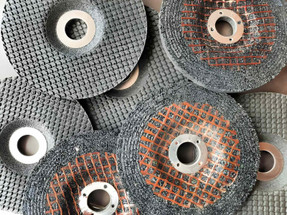
When the goal is heavy stock removal such as taking down a weld bead or beveling a thick plate grinding discs (Type 27) are the go-to. These are rigid and designed to handle significant lateral pressure. A common mistake is using a grinding disc for finishing; this usually results in deep gouges that take hours to sand out.
Cutoff Wheels
Thin is in when it comes to cutoff wheels. Designed for slicing through bar stock, pipe, or sheet metal, these discs are reinforced for safety but should never be used for side-grinding. Choosing a high-quality cutoff wheel reduces "kerf" (material loss) and minimizes the burr left on the edge.
Flap Discs: The Hybrid Hero
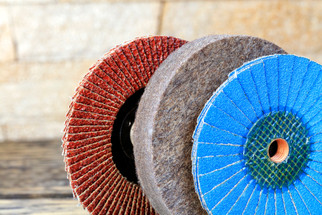
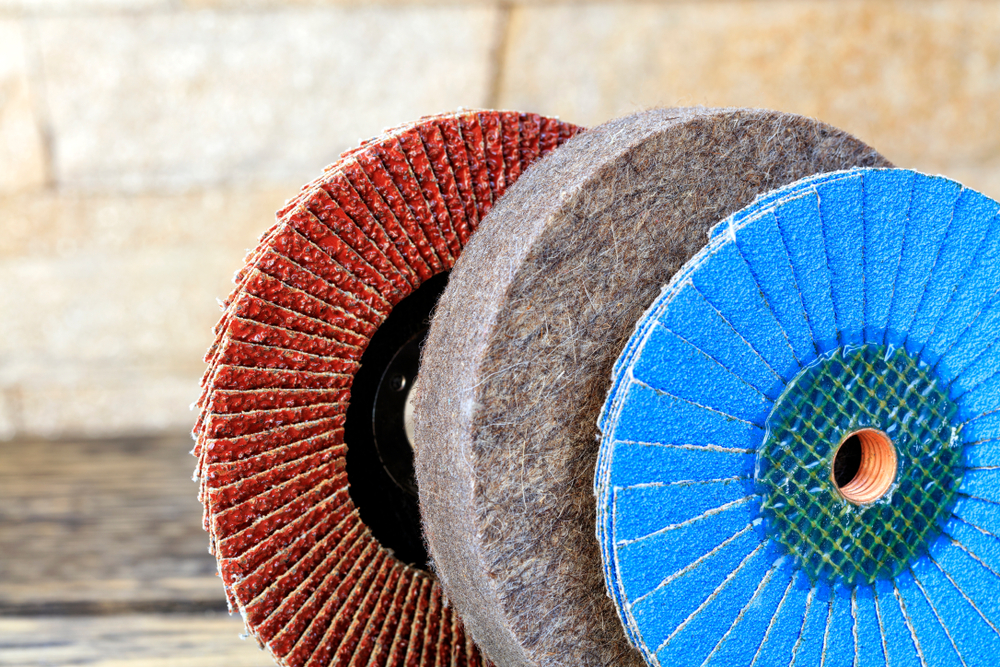
Flap discs have revolutionized the shop floor. By overlapping coated abrasive "flaps" on a backing plate, these tools provide a 2-in-1 solution: they remove material like a grinding disc but finish like a sanding disc. For B2B operations looking to reduce tool-change downtime, flap discs are often the most economical choice per part produced.
Sanding and Finishing Discs
When the heavy lifting is done, sanding discs and specialized metal finishing abrasives take over. These are used for blending, removing scratches, and achieving a specific Ra (Roughness Average) value. Options range from resin-fiber discs for aggressive blending to non-woven surface conditioning discs for a decorative finish.
3. Key Selection Criteria for the B2B Buyer
When outfitting a shop, keep these technical factors at the forefront of your procurement strategy:
- Grit Size: The lower the number (e.g., 24 or 36), the more aggressive the cut. Higher numbers (e.g., 80, 120, or 240) are for smoothing and polishing.
- Backing Material: Fiber backings offer rigidity for high-pressure grinding, while cloth backings offer flexibility for contoured parts.
- RPM Rating: Never exceed the maximum RPM listed on the disc. Matching the disc to your grinder’s speed is the single most important safety check you can perform.
- Attachment Style: Whether it's a "Quick-Change" (Roloc™ style), Hook & Loop, or a traditional center hole with a flange, ensure the attachment method fits your existing tool inventory to avoid bottlenecks.
Recommended Abrasive Solutions from Penn Tool Co.
To help you narrow down the vast selection, here is a breakdown of how different abrasive categories perform in a professional setting:
|
Product Category |
Best For |
Material Suitability |
Key Benefit |
|
Ceramic Flap Discs |
Heavy weld removal & blending |
Stainless Steel / High Alloys |
Longest life; cool cutting |
|
Zirconia Grinding Wheels |
Aggressive stock removal |
Carbon Steel / Iron |
High durability under pressure |
|
Ultra-Thin Cutoff Wheels |
Precision Slicing |
All Metals |
Minimal burr; fast cutting |
|
Fiber Sanding Discs |
Surface leveling |
Aluminum / Steel |
High versatility; low cost |
|
Non-Woven Discs |
Final Finishing |
All Metals |
Consistent, repeatable finish |
These solutions represent the backbone of North American metalworking. While a general-purpose AO disc might seem cheaper upfront, a Ceramic Flap Disc from a trusted brand often provides a lower total cost of use by outlasting the cheaper alternative 10 to 1.
The Penn Tool Co. Advantage
Navigating the nuances of abrasive materials and disc configurations doesn't have to be a solo mission. At Penn Tool Co., we specialize in providing the industrial-grade tools that keep North American shops running. From the highest-rated ceramic flap discs to precision cutoff wheels, our inventory is curated for performance and reliability.
When you choose your abrasives through a partner like Penn Tool Co., you aren’t just buying a consumable; you’re investing in the technical support and product depth required to solve your toughest fabrication challenges.
Frequently Asked Questions
1. When should I choose Ceramic abrasives over Zirconia?
Choose Ceramic for high-productivity environments and hard-to-grind metals like stainless steel or aerospace alloys. While Ceramic discs have a higher initial cost, their self-sharpening properties and longevity result in a lower cost-per-cut and significantly less downtime for tool changes compared to Zirconia.
2. Why is my abrasive disc "loading" or clogging?
Loading occurs when metal particles (especially from soft metals like aluminum) get stuck between the abrasive grains. To prevent this, use discs specifically designed with a "top coat" or lubricant, or select a more open-coat abrasive material that allows for better chip clearance during operation.
3. Are there specific safety standards for abrasive discs in North America?
Yes, always ensure your discs comply with ANSI B7.1 standards. This ensures the disc is constructed to handle the centrifugal forces of high-speed grinding. Always check for the maximum RPM rating and inspect discs for cracks or damage before mounting them to your tool.
4. How do I determine the correct grit for my metalworking project?
Start with the lowest grit (coarsest) required to remove the material or weld efficiently (usually 36 or 40). Then, move up in grit sizes (60, 80, 120) to refine the surface. A good rule of thumb is to never skip more than one grit size in a sequence.