Your Interapid Indicator Guide: Accuracy, Specs and the Best Picks
Your Interapid Indicator Guide: Accuracy, Specs and the Best Picks

The machine isn’t the core of precision machining. The measurement is. When your work demands alignment, runout, and concentricity verified to the ten-thousandth of an inch, you reach past the general-purpose tools and grab the icon: the Interapid indicator.
For generations, the name Interapid, now part of the TESA/Brown & Sharpe lineage, has been the benchmark for dial test indicators (DTIs) in the American machine shop. It’s not just a tool but a statement about the technician using its uncompromising standards.
But in a modern B2B landscape, where cost-effectiveness and data integrity are king, is the premium price justified? Is the Interapid test indicator truly superior to its closest rivals, and how do you leverage its specific features, the jewel of Swiss engineering, for maximum ROI?
Penn Tool Co. breaks down the core appeal, essential specifications, and head-to-head comparisons in this guide to ensure you are stocking the right instrument for precision operation.
The Unspoken Advantage: Why Interapid Earns Its Reputation
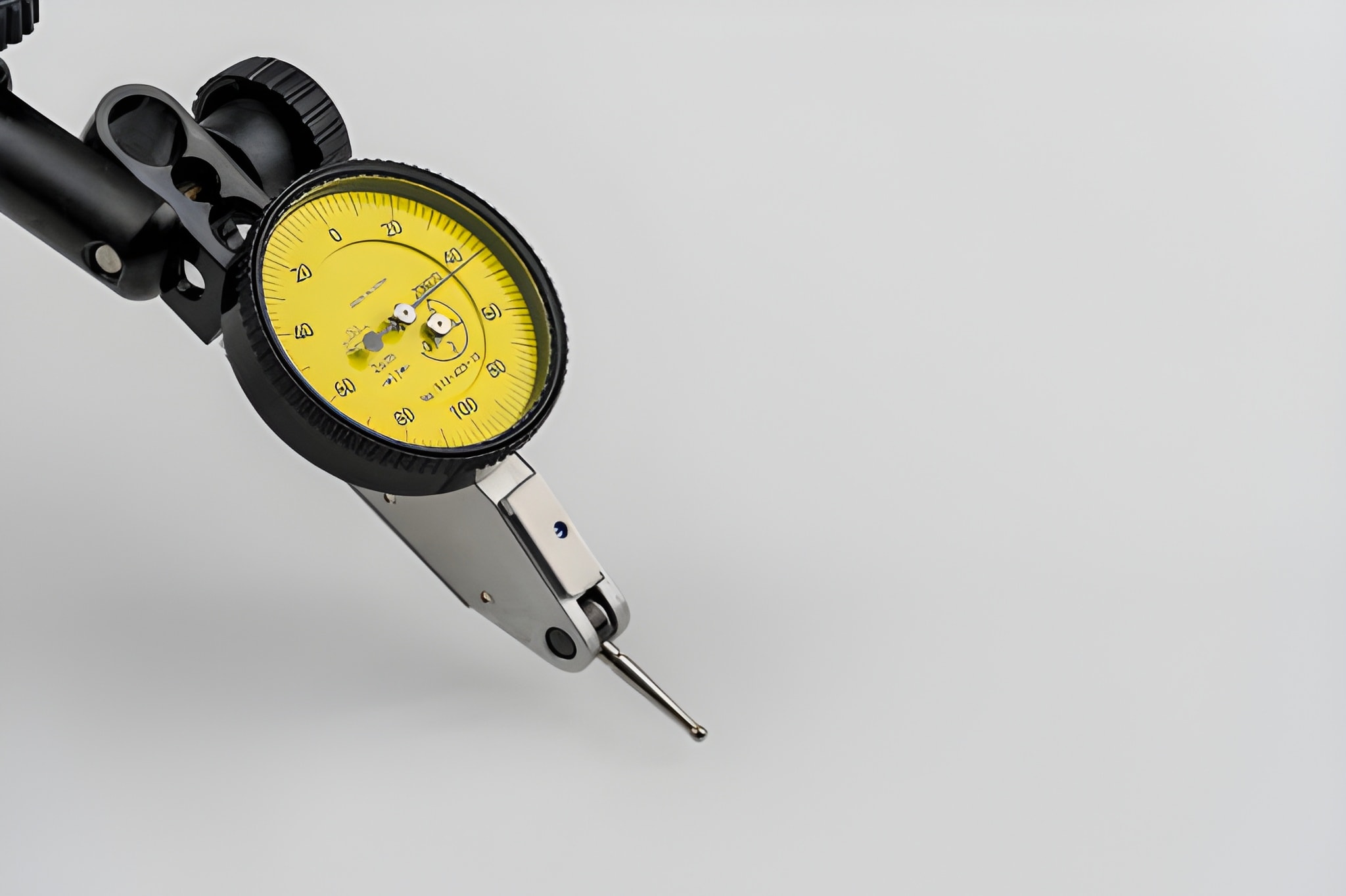
Interapid indicators embody Swiss engineering with their extreme precision, solid durability, and peerless repeatability. The design delivers trustworthy results, minimizing measurement error during demanding production and inspection. A signature inclined dial boosts readability, while a jeweled mechanism and ball bearing pivot yield ultra-smooth needle motion.
- Precision down to ±0.0005” or ±0.01mm
- Carbide contact point for wear resistance
- Automatic reversing contact point (swivels up to 210 degrees) makes them versatile for any position
- Very light measuring pressure, ideal for delicate work
- Offered in horizontal and vertical models
Interapid Indicator Specs: 312B-1 and 312B-3
When B2B buyers look for the best dial test indicator, the Interapid 312B-1 and Interapid 312B-3 are favored picks, each with specific strengths:
|
Model |
Graduation |
Measuring Range |
Dial Diameter |
Point Length |
Price Range |
Notes |
|
312B-1 |
0.0005” |
0–0.060” |
1.5” |
11/16” |
$325–$340 |
Horizontal, wide range |
|
312B-3 |
0.0001”, 0.0005”, 0.001” |
Up to 0.016” |
1”–1.5” |
Varies |
$250–$320 |
Vertical, ultra-sensitive option |
Both offer angled dials so operators can read measurements quickly, even at non-standard mounting angles. You’ll also find a revolution counter on the dial, to catch missed turns during extended checks.
Accuracy, Repeatability, and Calibration
Interapid test indicators are built for high-sensitivity readings, making them ideal for holding tight tolerances. Expect accuracy down to ±0.0005” and smooth repeatability in measurement, but only if the tool is calibrated and handled correctly.
Calibration is vital:
- Check zero with a certified calibration block before use
- If readings feel “jerky” or inconsistent, internal calibration or cleaning may be required: an issue occasionally posted by users with the 312B-3
- Routine calibration not only ensures precision but also extends the tool’s service life
How to Use an Interapid Indicator
Using an Interapid dial test indicator correctly is key to leveraging its high precision and long lifespan.
Step 1 | Mount Securely
- Fasten the indicator stem firmly onto a rigid magnetic base indicator.
- Goal: Ensuring zero deflection in the mount. A rock-solid setup prevents measurement error caused by mounting movement.
Step 2 | Zero with Reference
- Position the contact point against a precision reference surface (e.g., gauge block) and align the bezel to zero.
- Goal: Establishing a reliable datum for measuring runout or height difference.
Step 3 | Glide Gently
- Glide the stylus smoothly across the workpiece with slight, constant deflection. Avoid pressing or knocking.
- Rationale: Maintaining the extremely light measuring force to prevent deforming sensitive surfaces (thin-walled, soft parts) is a primary Interapid advantage.
Step 4 | Confirm Repeatability
- Observe the needle for smooth, steady movement. Repeat the sweep 2-3 times.
- Goal: Consistent readings confirm a rigid setup and optimal tool performance. Any hesitation suggests play or potential damage.
Step 5 | Utilize Auto Reversing
- Use the automatic reversing contact feature. The needle tracks movement correctly regardless of the stylus’s angle.
- Goal: Quickly and accurately measuring surfaces at difficult angles or in confined spaces without the need for remounting.
Interapid vs. Mitutoyo Test Indicator
Both brands are respected, but their dial mechanisms differ. This is a key consideration for B2B teams:
|
Brand |
Dial Movement |
Sensitivity |
User Preference |
Comments |
|
Interapid |
Bi-directional |
High |
Pros: Swiss build, angle dial |
May complicate discerning direction for some; better for experienced users |
|
Mitutoyo |
Uni-directional |
High |
Easier to read for most users |
Preferred by some for clarity, especially in setups |
B2B users looking for utmost versatility and Swiss-made repeatability often lean on Interapid, but Mitutoyo wins fans for straightforward dial movement. Choosing what’s best for your business comes down to staff preference and task complexity.
Maximizing Interapid Indicator Accuracy: A Pro Checklist
An Interapid is only as good as the technique applied. To ensure your investment delivers true Interapid indicator accuracy and repeatability, enforce these principles:
- Mounting Rigidity: Use a high-quality, solid mag base (preferably with fine adjustment) and a stand with minimal flex. Any movement in the mount translates directly into measurement error.
- The 12° Rule: Interapid indicators are designed for optimal accuracy when the contact point is set at an approximate 12° angle relative to the surface being measured. This minimizes cosine error, the inherent angular error of any lever-style indicator.
- Use the Center of Travel: The highest accuracy and linearity are always achieved near the center of the indicator’s travel range. Use the revolution counter to ensure you are not at the extreme ends of the 0.060” or 0.016” range.
- Calibrate the System: The true indicator of a quality instrument is its calibration history. While the indicator itself is Swiss-made, its performance must be periodically verified against certified gauge blocks using an A2LA-accredited lab. Do not neglect this critical step.
Penn Tool Co.’s Top Interapid Indicators Pick
|
Product |
Model |
Graduation |
Range |
Key Features |
|
Interapid Horizontal Swiss Test Indicator |
312B-1 |
.0005” |
.060” |
Inclined dial, carbide point, jewelled movement |
|
Interapid Vertical Dial Test Indicator |
312B-3 |
.0001”, .0005”, .001” |
.016” |
Angled dial, multiple sensitivities |
Investing in Your QA Future
In the world of precision manufacturing, time is money, and scrap is failure. Investing in a premium metrology tool like the Interapid indicator isn’t a luxury. It’s a strategic decision that gives returns with guaranteed quality, reduced setup time, and confidence in your final product.
When the tolerance is tight and the job is critical, there is no substitute for the precision engineering of a Swiss-made instrument.
Interapid test indicators deliver legendary precision, rugged Swiss quality, and flexible usability, making them indispensable for B2B operations focused on high-accuracy work. Whether you choose the horizontal 312B-1 or the ultra-sensitive 312B-3, you gain a tool designed to perform through years of demanding production.
Paired with the right accessories from Penn Tool Co., your inspection and setup routines will be smoother, and those tenths, hundredths, and thousandths will be nailed every time.