How to Use a Telescoping Gauge for Accurate Bore Measurements
How to Use a Telescoping Gauge for Accurate Bore Measurements

In the world of precision machining, there is a common saying: "You can’t manage what you can’t measure." While digital technology has introduced high-end sensors and automated probes, the humble telescoping gauge remains a must-have in the professional toolbox of every shop owner, quality control manager, and seasoned machinist.
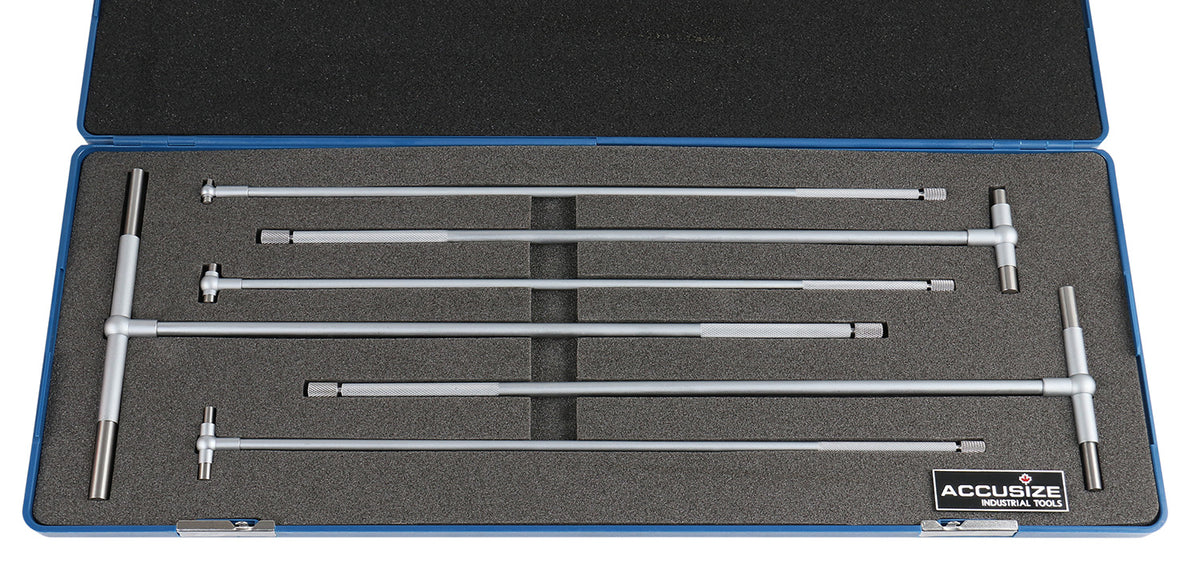
Often called "T-gauges," these tools are the unsung heroes of internal diameter (ID) measurement. However, unlike a digital caliper that gives you a number at the press of a button, a telescoping gauge requires a blend of technical knowledge and "tactile intuition." If your team isn't trained on the proper telescoping gauge measurement technique, those "accurate" readings might actually be leading to scrapped parts and wasted man-hours.
In this machinist telescoping gauge guide, we’ll dive deep into the mechanics of the tool, the step-by-step process of capturing a perfect reading, and why mastering this "indirect" measurement tool is a milestone of sorts for any serious professional.
Why the Telescoping Gauge Still Rules the Shop Floor
Before we get into the telescoping gauge tutorial, it’s important to understand where this tool fits in your metrology arsenal. A telescoping gauge is an indirect measurement tool. It doesn't have a dial or a digital readout. Instead, it "captures" the dimension of a bore, which you then measure using a high-precision outside micrometer.
Telescoping Gauge vs. Bore Gauge
You might wonder: Why use a T-gauge when I could use a dial bore gauge? It usually comes down to three factors:
- Versatility: A single set of telescoping gauges can cover a range from 1/2" to 6", whereas dial bore gauges often have narrower ranges per head.
- Access: The slim profile of a telescoping gauge ensures it can fit into tight spaces where a bulky dial indicator might not reach.
- Cost-Efficiency: For many B2B operations, outfitting every workstation with a $500 dial bore gauge isn't feasible. A high-quality telescoping gauge set from brands like Starrett or Mitutoyo, available at Penn Tool Co., offers professional-grade telescoping gauge accuracy at a fraction of the investment.
How to Measure Bore with Telescoping Gauge: A Step-by-Step Guide
To achieve repeatable results, you must follow a disciplined process. Let’s look at how to use a telescoping gauge effectively:
1. Preparation and Cleaning
Accuracy starts with cleanliness. Any chips, coolant residue, or burrs inside the bore will throw off your reading by several thousandths of an inch. Wipe down the internal surface of the workpiece and the contact points of the gauge. Check that the plungers on the gauge move smoothly and that the locking screw at the top of the handle functions correctly.
2. Selecting the Right Size
Choose a gauge where the bore diameter falls in the middle of the gauge’s range. If you use a gauge near its maximum extension, the internal springs might not provide enough tension for a firm "feel."
3. Inserting the Gauge
Compress the plungers with your fingers and tighten the knurled screw at the end of the handle. Insert the gauge into the bore at a slight angle. Once inside, loosen the screw to enable the plungers to expand and contact the walls of the bore.
4. The "Rocking" Technique (The Secret to Accuracy)
This is where the magic happens. To find the true diameter (the apex of the circle), you must "rock" the handle.
- Tighten the locking screw just enough so the plungers can still move with some resistance.
- Move the handle back and forth through the center of the bore.
- As the handle passes through the vertical center, the plungers will be pushed into the exact dimension of the bore’s diameter.
- Lock the screw firmly once you’ve felt the "high point" of the arc.
5. Extraction
Carefully tilt the gauge to one side to remove it from the hole. Be gentle; you don't want to jar the plungers, as even the best locking mechanism can shift if bumped hard against a steel edge.
Transferring the Measurement: The Final Hurdle
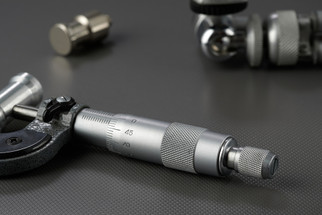
Once the gauge is locked, the bore measurement with the telescoping gauge is only halfway done. You now have a physical "snapshot" of the hole. To get a numerical value, you must use an outside micrometer.
Hold the micrometer in one hand and the telescoping gauge in the other. Pass the gauge through the micrometer anvils. You are looking for the same "feel" you had in the bore~ a slight drag or "click" as the gauge passes through the center point. If it’s too loose, your micrometer is opened too far; if it won't pass through, the micrometer is too tight.
Achieving Pro-Level Telescoping Gauge Accuracy
For B2B environments where ISO standards and tight tolerances are the norm, "close enough" isn't an option. To ensure telescoping gauge accuracy, keep these tips in mind:
-
Temperature Matters: In a high-production shop, parts can get hot. Both the part and the gauge should ideally be at a stable room temperature (typically 68°F or 20°C) to avoid thermal-expansion errors.
-
The Three-Point Check: Never rely on a single measurement. Measure the top, middle, and bottom of the bore. This helps identify "taper." Additionally, rotate your measurement 90 degrees to check for "out-of-roundness" or ovality.
-
Consistency is Key: If three different machinists measure the same bore, they should ideally get the same result. This requires standardized training on the "feel" of the tool.
Sourcing the Right Tools
When precision is your product, the quality of your tools reflects the quality of your brand. Buying "bargain bin" gauges often leads to inconsistent spring tension and soft metal contact points that wear down over time.
At Penn Tool Co., we specialize in providing North American shops with the gold standard of metrology. Brands like Starrett, Mitutoyo, and Fowler offer telescoping gauges with hardened contact points and precision-ground radii, ensuring longevity and repeatability.
Final Thoughts: The Art of the Measurement
Learning how to measure bore with telescoping gauge is a foundational skill that bridges the gap between manual craftsmanship and modern engineering. It teaches a technician to "listen" to the metal through their fingertips. By mastering the telescoping gauge measurement technique, your shop can maintain high-quality assurance standards without the need for overly expensive electronic systems for every routine check.
Precision isn't just about the tools you own; it's about how you use them. With the right technique and a high-quality set of gauges from Penn Tool Co., you can ensure that every bore you measure is within tolerance, every time.
Frequently Asked Questions
1. What is the main advantage of using a telescoping gauge over a digital caliper for bores?
While digital calipers are convenient, they often struggle with accuracy inside deep bores due to the thinness of their internal jaws. A telescoping bore gauge provides a self-centering action and a larger contact surface, which significantly reduces "canting" (tilting) errors, leading to a much more accurate diameter reading.
2. How do I know if I have the "correct" feel when rocking the gauge?
The "correct" feel is a light, consistent drag at the narrowest point of the arc. It shouldn't feel like the tool is jamming, nor should it drop through without resistance. Most machinists describe it as a "velvet-like" friction. Consistent practice against a known ring gauge is the best way to calibrate your touch.
3. How should I maintain my telescoping gauge set?
Keep the plungers lightly oiled with high-quality instrument oil to prevent rust and ensure smooth travel. Always store them in their provided case to prevent the contact points from getting nicked. If a gauge is dropped, inspect the radii of the plungers for flats or burrs that could skew measurements.