12 Practical Ways to Use WD-40 in Your Workshop or Manufacturing Business
12 Practical Ways to Use WD-40 in Your Workshop or Manufacturing Business

A squeaky hinge, a stubborn bolt, or a tool showing signs of rust might seem like minor problems. But in a busy workshop, small maintenance issues can consume valuable time. WD-40 can help tackle many of these everyday challenges when used correctly.
From loosening rusted fasteners to protecting metal tools against corrosion, WD-40 Multi-Use Product has earned its place in workshops, garages, and maintenance departments around the world.
But how much can you actually do with that familiar blue-and-yellow can? And when should you choose a specialist lubricant instead?
Whether you're a machinist, maintenance technician, workshop owner, or manufacturing professional, here are 12 practical ways to use WD-40 in your workplace, along with important tips for getting the job done right.
What Is WD-40, and How Does It Work?
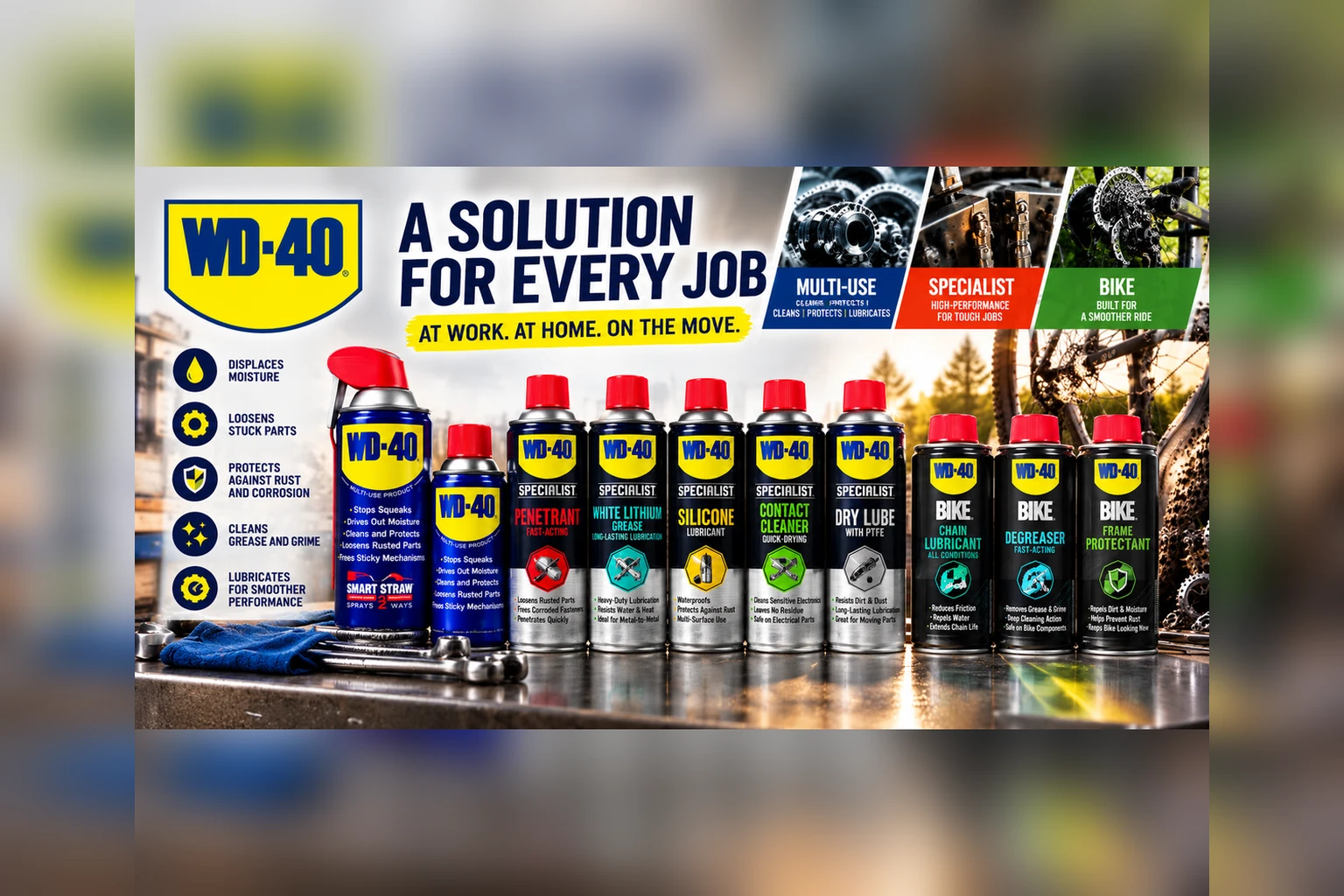
WD-40 Multi-Use Product is designed to perform five primary functions: lubricating, penetrating, protecting metal against corrosion, removing certain contaminants, and displacing moisture.
The name WD-40 stands for Water Displacement, 40th formula. According to the manufacturer, the product's development involved testing successive formulations until the successful formula was achieved. Learn more from WD-40 India.
Its versatility makes it useful for routine maintenance tasks involving suitable metal components, fasteners, tools, and equipment. However, WD-40 Multi-Use Product is not a universal replacement for industrial grease, machine oil, or application-specific lubricants. Understanding the difference can help you select the right product for the job.
- Lubricating: Helps suitable moving components operate more smoothly.
- Penetrating: Helps loosen stuck, frozen, or rusted metal parts.
- Protecting: Leaves a protective film on suitable metal surfaces.
- Removing: Helps loosen certain deposits of dirt, grease, grime, and adhesive residue.
- Displacing moisture: Helps remove moisture from appropriate surfaces.
These functions make WD-40 useful for many routine maintenance tasks. The original Multi-Use Product is not a universal substitute for machine oil, industrial grease, penetrating oils, or specialist cleaning products. See WD-40 India's product guidance.
12 Practical WD-40 Uses for Workshops and Manufacturing Facilities
1. Loosen Rusted Bolts, Nuts, and Fasteners
Corroded fasteners can create unnecessary delays during equipment repairs and maintenance. Rust around threaded connections can make bolts and nuts difficult to remove without damaging the threads. WD-40 Multi-Use Product can help loosen certain stuck metal components. For heavily rusted or seized fasteners, WD-40 Specialist Penetrant is a more targeted option.
How to use it: Apply the appropriate product to the exposed threads and allow time for penetration before attempting removal. Use the correct tool and avoid excessive force.
Best suited for: Maintenance technicians, mechanics, fabrication shops, and industrial repair teams. Explore WD-40 Specialist Lubricants at Penn Tool Co.
2. Protect Hand Tools Against Rust and Corrosion
Hand tools are essential investments for machinists, mechanics, and maintenance professionals. Exposure to humidity, moisture, and improper storage can cause corrosion, especially on unprotected steel surfaces. WD-40 Multi-Use Product can help protect suitable metal tools by leaving a moisture-resistant film.
How to use it: Clean and dry the tool, apply a light coating where appropriate, and wipe away excess product. Store tools in a dry, suitable environment. For precision measuring instruments such as micrometers and calipers, follow the manufacturer's instructions to avoid affecting measuring surfaces or accuracy.
3. Lubricate Suitable Hinges and Moving Mechanisms
Squeaking hinges, stiff access panels, and difficult-to-operate mechanisms are common maintenance problems. WD-40 Multi-Use Product can help lubricate suitable hinges and linkages, reducing friction and eliminating certain squeaks. Components exposed to heavy loads, extreme temperatures, or continuous operation may need a dedicated lubricant with specific performance characteristics.
Workshop tip: Identify the cause of friction first. Dirt buildup, worn components, and misalignment may call for cleaning, adjustment, or repair rather than lubrication alone.
4. Displace Moisture From Suitable Metal Components
Moisture can accelerate corrosion on exposed metal parts, particularly in humid environments or facilities where condensation is common. WD-40 Multi-Use Product helps displace moisture and protect suitable metal surfaces, provided the product is approved for the application.
Important: Do not spray the standard product indiscriminately into energized electrical equipment. Follow the equipment manufacturer's instructions and use a suitable electrical contact cleaner when the application requires one.
5. Remove Certain Grease, Grime, and Adhesive Residues
Workshop tools and equipment can accumulate oil, grime, and sticky residue. WD-40 Multi-Use Product can help loosen certain contaminants and adhesive residues on compatible surfaces. Apply a small amount, check material compatibility, and wipe clean using an appropriate cloth. For heavy industrial contamination, a dedicated degreaser or parts-cleaning solution may be more appropriate.
This matters especially when surfaces will subsequently be painted, welded, bonded, or used in precision assembly.
6. Protect Metal Components During Storage
Metal parts awaiting assembly, shipment, or installation may be vulnerable to corrosion during storage. WD-40 Multi-Use Product may suit selected short-term protection applications. For longer storage periods or demanding environments, a dedicated corrosion inhibitor can offer more appropriate protection.
WD-40 Specialist Corrosion Inhibitor is designed to protect suitable metal components against corrosion, including in damp storage conditions. Browse WD-40 products at Penn Tool Co. Verify the required protection period, surface compatibility, and subsequent cleaning requirements before choosing a corrosion inhibitor.
7. Maintain Facility Hardware and Outdoor Equipment
Manufacturing businesses maintain more than production machinery. Doors, latches, gates, hinges, hand tools, and outdoor fixtures also need regular attention. WD-40 can help loosen certain stuck mechanisms and protect compatible metal surfaces against moisture-related corrosion. For chains, cutting blades, and specialized equipment, use the lubricant recommended for that particular component.
8. Lubricate Suitable Sliding Tracks and Rollers
Sliding mechanisms can become difficult to operate because of dirt, corrosion, or inadequate lubrication. WD-40 Multi-Use Product may help with compatible mechanisms, but it is not always the best choice for tracks that collect substantial dust. WD-40 Specialist Dry Lube is designed to leave a lubricating film that resists dirt and dust buildup, making it worth considering for suitable slides, rollers, and door or window tracks.
Best suited for: Maintenance teams, equipment installers, and workshops where cleanliness matters. Explore WD-40 Specialist Lubricants at Penn Tool Co.
9. Support Routine Maintenance of Power Tools
Power tools face dust, debris, and demanding working conditions. WD-40 may help protect compatible external metal surfaces and loosen certain residues during routine maintenance. Disconnect the power source and follow the manufacturer's instructions before cleaning or servicing a tool.
Do not spray standard WD-40 into a motor, switch, battery compartment, or electrical assembly unless the manufacturer explicitly permits it.
10. Maintain Suitable Metal Fixtures and Fasteners
Industrial facilities contain many small metal components that need periodic attention, including brackets, latches, fasteners, and access-panel hardware. WD-40 can help loosen certain stuck fasteners and protect compatible metal hardware against corrosion. A structured preventive maintenance routine helps catch minor problems before they interfere with equipment operation.
For structural fasteners, safety-critical assemblies, and precision machinery, follow the prescribed maintenance procedure.
11. Help Prepare Compatible Surfaces for Maintenance
Before maintaining metal equipment, technicians may need to remove surface grime, loosen deposits, or address light contamination. WD-40 can assist with selected preliminary cleaning tasks, depending on the material and type of contamination. It is not a universal rust remover or a substitute for proper surface preparation.
If a component needs to be painted, welded, bonded, or coated, remove incompatible residues and prepare the surface according to the requirements of the next process.
12. Support a More Effective Preventive Maintenance Routine
The most valuable application of WD-40 may be its role in a broader maintenance strategy. Regularly inspecting tools, cleaning compatible components, protecting metal surfaces, and addressing minor mechanical problems can help reduce avoidable maintenance interruptions.
WD-40 can support selected tasks within that routine, but it cannot replace scheduled servicing, equipment inspections, or the correct lubricants for critical machinery. The goal is to identify the problem, choose the right product, and apply it according to the manufacturer's instructions.
WD-40 Multi-Use Product vs. Specialist Lubricants: Which Should You Choose?
One common workshop mistake is assuming that every lubricant performs the same function. Different formulations are designed for different requirements. The correct choice depends on load, temperature, moisture exposure, dust accumulation, material compatibility, and equipment specifications.
| Maintenance requirement | Product type to consider | Primary purpose |
|---|---|---|
| General-purpose maintenance | WD-40 Multi-Use Product | Moisture displacement, light lubrication, penetration, and corrosion protection |
| Rusted bolts and seized fasteners | Penetrating oil | Helps loosen corroded connections |
| Applications where dust accumulation matters | Dry-film lubricant | Lubrication with reduced sticky residue |
| Suitable metal-to-metal applications requiring persistent lubrication | Appropriate industrial grease | Provides a longer-lasting lubricating film |
| Compatible rubber and plastic mechanisms | Application-approved silicone lubricant | Lubrication for selected materials and applications |
| Cleaning suitable electrical contacts | Electrical contact cleaner | Cleaning compatible electrical components |
| Longer-term protection of stored metal components | Corrosion inhibitor | Protection against rust and corrosion |
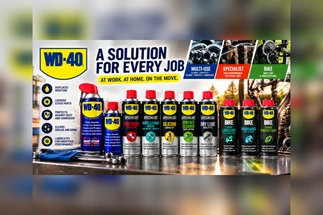
WD-40's Specialist range includes products formulated for more specific maintenance requirements. Consult the product documentation and equipment manufacturer's recommendations before selecting a formulation.
Recommended WD-40 Products to Consider for Your Workshop
Choosing the right product is easier when you start with the maintenance problem you need to solve. These are relevant options to explore through Penn Tool Co., selected for their applications and not ranked by verified sales volume.
- WD-40 Multi-Use Product. Best for general-purpose workshop maintenance: moisture displacement, loosening stuck parts, light lubrication, removing certain contaminants, and protecting suitable metal. Shop WD-40 Multi-Use Product, Industrial Size, 16 oz.
- WD-40 Multi-Purpose Spray Lubricant With Smart Straw. Best for general maintenance that needs precision application and broader spray coverage. Shop WD-40 Multi-Purpose Spray Lubricants.
- WD-40 Specialist Rust Release Penetrant. Best for stuck bolts, rusted nuts, threaded connections, and seized components. Explore WD-40 Specialist Lubricants.
- WD-40 Specialist Long-Term Corrosion Inhibitor. Best for protecting suitable metal during storage or damp conditions. Browse WD-40 Specialist products.
- WD-40 Specialist Dry Lube. Best for suitable sliding mechanisms and applications where reducing dirt and dust buildup matters. Explore WD-40 Specialist Lubricants.
- WD-40 Specialist Degreaser. Best for removing grease and grime from compatible surfaces before inspection or maintenance. Check product instructions and equipment cleaning requirements. Browse WD-40 products at Penn Tool Co.
Looking for the right maintenance product? Browse the linked selections and verify the available formulation, size, specifications, and suitability for your application before purchasing.
Common WD-40 Mistakes to Avoid
- Using WD-40 instead of the specified machine lubricant: Bearings, gearboxes, hydraulic systems, and other critical components require lubricants selected for their operating conditions.
- Applying it to brake friction surfaces: Never contaminate brake discs or pads with WD-40.
- Using it indiscriminately on electrical components: Standard WD-40 Multi-Use Product is not a universal electrical contact cleaner. Follow the equipment manufacturer's instructions.
- Ignoring material compatibility: Check the product label before applying any lubricant or cleaner to sensitive materials, finishes, or assemblies.
- Applying a lubricant without cleaning the component: Dirt and debris can interfere with lubrication and equipment performance. Clean the component when the maintenance procedure requires it.
- Ignoring workplace safety: Review the product label and safety data sheet. Aerosols may be flammable; adequate ventilation and appropriate protective equipment may be necessary.
Frequently Asked Questions About WD-40
What is WD-40 used for?
WD-40 Multi-Use Product is used for moisture displacement, light lubrication, loosening stuck parts, removing certain contaminants, and protecting suitable metal surfaces against rust and corrosion.
Can WD-40 prevent rust on metal tools?
Yes. WD-40 Multi-Use Product can help protect suitable metal surfaces by leaving a protective film. The level and duration of protection depend on the application and environmental conditions. A dedicated corrosion inhibitor may be more appropriate for longer-term storage.
Is WD-40 suitable for industrial machinery?
WD-40 can support selected maintenance tasks involving compatible components, but it should not replace the specified lubricant for bearings, gearboxes, hydraulic systems, or other critical machinery.
Is WD-40 a penetrating oil or a lubricant?
It performs several functions, including penetration, light lubrication, moisture displacement, cleaning, and corrosion protection. A dedicated penetrating oil or specialist lubricant may be more suitable for particular applications.
What is the difference between WD-40 Multi-Use Product and WD-40 Specialist?
WD-40 Multi-Use Product is designed for a broad range of maintenance applications. WD-40 Specialist includes formulations intended for more specific requirements, such as penetrating stuck parts, dry lubrication, and corrosion protection.
Can WD-40 remove rust?
WD-40 Multi-Use Product can help loosen rusted fasteners and protect suitable metal surfaces against further corrosion. It is not a universal solution for removing heavy rust or restoring severely corroded metal.
How often should WD-40 be applied?
There is no universal application interval. Frequency depends on the component, environmental conditions, use, and required level of protection. Follow the product instructions and equipment manufacturer's maintenance schedule.
Where can I buy WD-40 products for workshop maintenance?
You can explore the linked WD-40 product selections on Penn Tool Co.'s website to identify products relevant to your requirements. Check each listing for current availability, specifications, and purchasing information.
Final Thoughts: Choose the Right WD-40 Product for the Job
WD-40 has earned its place in workshops because it can help address common problems involving moisture, corrosion, stuck parts, and light lubrication. Effective maintenance, though, is about understanding the component, identifying the actual problem, and selecting a solution suited to the operating conditions.
Whether you are maintaining hand tools, managing a machine shop, or overseeing an industrial facility, choosing appropriate maintenance products and following sound preventive maintenance practices can help keep your equipment in better working condition.
Looking for tools and equipment for your workshop? Explore the industrial tools, machining equipment, measuring instruments, and workshop essentials available from Penn Tool Co. to support your next maintenance or manufacturing project.
Maintenance note: Always consult the product label, technical documentation, and equipment manufacturer's recommendations before applying any lubricant or cleaning product.
```