Electrical Components for Machine Shops | Penn Tool Co.
Electrical Components for Machine Shops | Penn Tool Co.

In high-stakes American manufacturing, machine shops live and die by electrical reliability. When Computer Numerical Control (CNC) systems, vertical mills, and heavy-duty lathes are pushing metal all day, a single electrical fault doesn't just halt production, it directly eats into your profit margins, compromises operator safety, and threatens your competitive edge. Sourcing the right electrical components for machine shops is a non-negotiable requirement for minimizing high-cost operational downtime.
For over five decades, Penn Tool Co. has stood as a cornerstone of the metalworking community. We understand the demanding reality of the harsh shop environment. A floor filled with oil mist, abrasive metallic dust, continuous coolant spray, and high-pressure mechanical vibration requires more than standard commercial-grade hardware. It requires industrial-grade gear designed to maximize productivity, efficiency, and profitability while upholding strict protocols for electrical safety.
Swapping manual guesswork for data-driven accuracy requires a rock-solid electrical infrastructure. Backed by industry powerhouses like Eaton, Schneider Electric, Philips, 3M, and Legrand, here is the definitive, comprehensive guide to the essential electrical components that keep modern shops running safely, efficiently, and completely within code.
1. The Protection Frontline: Breakers, Fuses and Surge Devices
Unstable current is the primary threat to sensitive machine tools. Protecting your shop floor assets starts at the power entry point, establishing a barrier before current ever hits a spindle. You can find these essentials within our broad array of industrial lighting and electrical supplies.
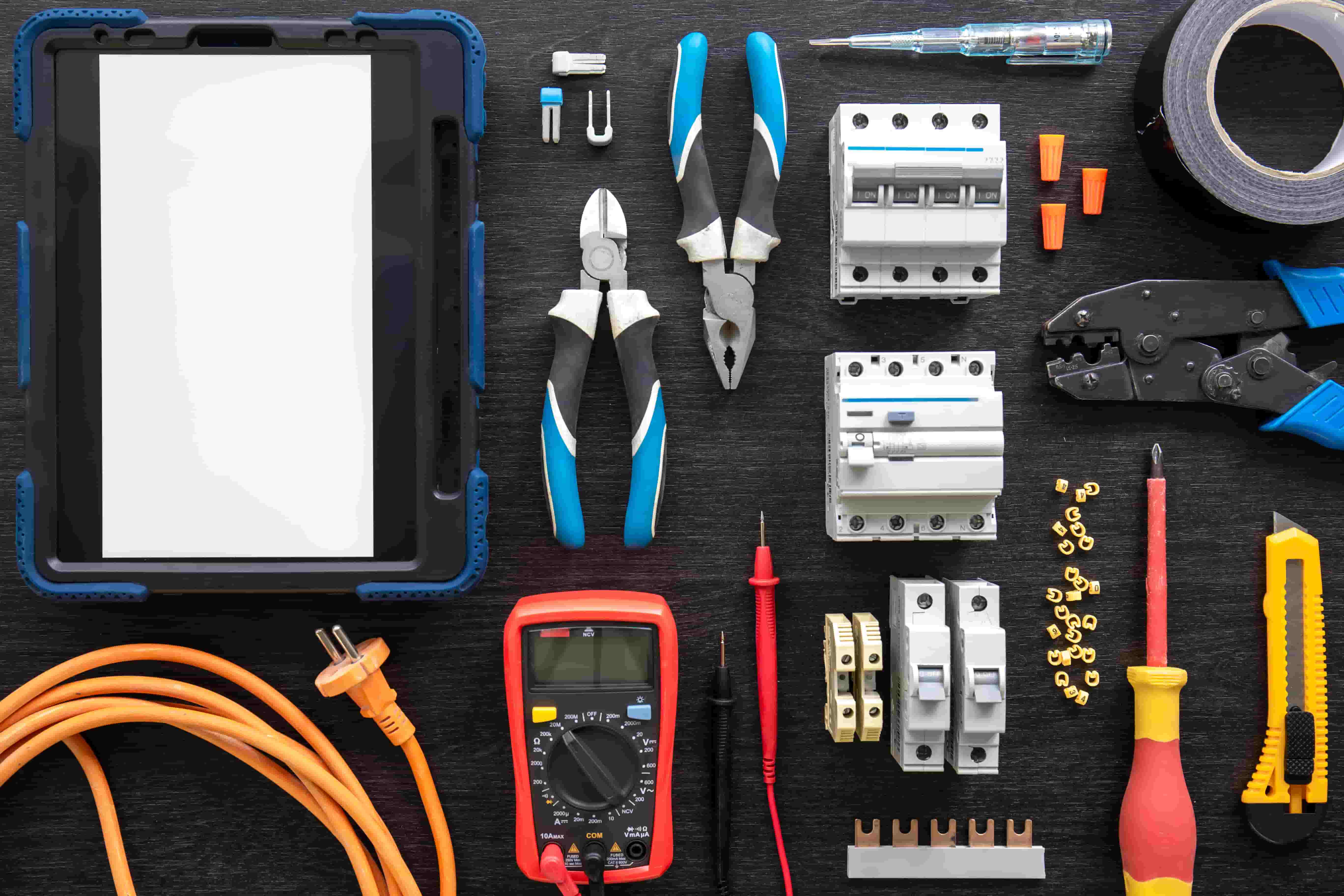
- Circuit Breakers: These serve as resettable, automated sentinels. Rather than relying on a central building breaker, where a single mechanical jam on a manual lathe can kill power to an entire line of CNCs, installing dedicated Eaton or Schneider Electric molded-case or miniature breakers isolates electrical faults to individual bays.
- Industrial Fuses: While breakers provide excellent macro-protection, fast-acting sacrificial cartridge and plug fuses remain essential for sensitive electronics. With zero moving parts, they react instantly to protect control transformers and PLC circuits from massive shorts.
- Surge Protection Devices (SPDs): Over 80% of industrial voltage transients are generated internally when heavy inductive loads like welders or compressors cycle on and off. Industrial-grade SPDs clamp microsecond spikes, saving delicate CNC boards from data corruption and premature failure.
2. The Automation Engine: Contactors, Relays, and Limit Switches
Automated workflows, such as cycling high-pressure coolant pumps or running integrated chip conveyors, rely on a rugged, interconnected layer of electromechanical hardware.
- Contactors and Starters: The high-amperage muscle behind three-phase motors. Industrial motor contactors and combination across-the-line starters from Schneider Electric and Eaton help safe, low-power control signals magnetically close robust contacts, keeping your machine operators completely isolated from high-voltage hazards.
- Electrical Switches and Relays: The logic core of your control cabinets. Plug-in relays, toggle switches, pushbuttons, and selector switches coordinate automated sequences. When paired with overload relays, they form integrated motor assemblies that safeguard against single-phase failures and thermal overloads.
- Limit Switches: Physical anti-collision safeguards mounted at the absolute end of travel axes or on safety doors. When a heavy milling table passes a safe boundary, it triggers the switch to instantly halt motion.
The Harsh Shop Rule: Abrasive metallic dust acts as a conductor, and oil mist can coat electrical contact pads, causing immediate failure. For a secure return on investment, source heavy-duty, oil-tight control components that feature stringent IP65 or IP67 ingress protection ratings.
3. Power Transformation and Drive Dynamics
Industrial equipment rarely matches local plant utility voltages or raw motor speeds out of the box. Translating that power smoothly requires specialized drive hardware.
- Phase Converters and Distribution Blocks: For smaller operations lacking native three-phase infrastructure, rotary or digital phase converters synthesize the required third voltage leg to let you run heavy machinery anywhere. Heavy-duty power distribution blocks from Eaton provide structured connection points for multiple conductors.
- Control Transformers: Industrial transformers provide the magnetic isolation needed to safely step down your plant's primary power (e.g., 480V three-phase) into machine-specific requirements (such as 240V for main drives or 120V/24V for internal logic loops).
- Power Supplies and Wire Connectors: High-quality Power Supply Units (PSUs) supply clean, regulated DC current to encoders and digital readouts (DROs). Ensure long-term continuity by securing links with 3M electrical wire connectors, terminals, and specialized grounding wire to bleed off high-frequency harmonic noise.
4. Operational Safety, Enclosures, and Shop Illumination
The final tier of a resilient electrical setup coordinates safety enforcement, environmental shielding, system health checks, and precision visibility.
- Disconnect Switches: Manually operated switches featuring high-visibility, external handles that accept standard padlocks. Positioned in the direct line of sight of your operators, they cleanly break the incoming feed to ensure absolute electrical safety during Lockout/Tagout (LOTO) maintenance.
- Electrical Enclosures and Boxes: Sealed, NEMA-rated industrial Cooper or Legrand enclosures and weatherproof junction boxes provide a safe haven away from floating oil, moisture, and flying chips. Route your cabling securely into protective enclosures using rigid or flexible conduits, ducts, and cable trays to eliminate tripping hazards.
- Electrical Test Equipment: Routine preventive maintenance saves thousands in emergency repairs. Equipping your internal maintenance techs with reliable diagnostic test equipment, including digital multimeters and clamp meters, enables them to trace voltage drops and verify ground paths before failures occur.
- Industrial Work Lights and Task Lighting: Precision machining requires superior visibility. Outfit your CNC cells, mills, and workstations with specialized machine lights and magnifying task lights from Philips or Hubbell Lighting. Keep maintenance benches ready with Streamlight industrial flashlights and headlamps, and ensure code compliance with backup emergency lights and exit signs.
Summary: Electrical Component Roles and Maintenance Actions
|
Component Category |
Machine Shop Function |
Critical Maintenance Check |
Featured Brands |
|
Circuit Breakers and Fuses |
Isolates overcurrents to single machine bays |
Inspect for discolored casings or loose terminal screws yearly. |
Eaton, Schneider Electric |
|
Contactors and Starters |
High-power three-phase motor switching |
Listen for audible humming or chattering; inspect contacts for pitting. |
Eaton, Schneider Electric, Cooper |
|
Phase Converters and Blocks |
Phase generation and power distribution |
Clean terminal busbars; verify voltage balance across lines quarterly. |
Eaton, Schneider Electric |
|
Connectors and Grounding |
Solid electrical paths and noise reduction |
Check grounding wire path continuity to prevent CNC data glitches. |
3M, Legrand |
|
Enclosures and Conduits |
Environmental protection against shop fluids |
Check rubber door gaskets for cracks or breakdown from oil exposure. |
Legrand, Cooper, Eaton |
|
Industrial Switches |
Manual panel control and safety logic |
Verify positive mechanical snap engagement of toggle and pushbuttons. |
Schneider Electric, Eaton, Legrand |
|
Test Equipment |
Diagnoses continuity, shorts, and load |
Calibrate regularly to keep readings accurate for sensitive CNC diagnostics. |
Eaton, Schneider Electric, 3M |
|
Work and Machine Lights |
High-visibility illumination for cutting zones |
Wipe away accumulated coolant film and metal splash from lens guards. |
Philips, Hubbell Lighting, Streamlight |
Pro Buyer Tips to Maximize Electrical ROI in Your Workshop
- Implement a Proactive Spare Stocking Policy: Do not wait for a critical contactor or unique cartridge fuse to blow mid-shift. Maintain a dedicated cabinet filled with basic replacements like switches, relays, contactors, fuses, limit switches, and breakers to minimize unexpected downtime.
- Insist on NIST-Traceable Test Tools: When checking your machine incoming power profiles or validating internal control voltages, ensure your diagnostic meters are calibrated properly to protect sensitive CNC assets and enforce baseline electrical safety.
- Match Ratings Carefully: Never swap industrial electrical components for machine shops out for residential or light-commercial equivalents just to save a few dollars. The harsh ambient conditions and intense thermal cycling of a machine shop will destroy under-rated components in a matter of weeks, introducing severe operational hazards.
Protect Your Assets, Protect Your Bottom Line
At the end of the day, accuracy drives profit, but an elite machining setup is only as reliable as the electrical infrastructure feeding it. Upgrading a manual mill with a new digital readout or deploying advanced CNC cells means very little if a baseline voltage transient, a fluid-compromised limit switch, or a blown unstocked fuse brings your entire production run to a grinding halt.
By prioritizing industrial-grade hardware, keeping a proactive inventory of essential spares, and ensuring strict environmental protection with sealed enclosures and oil-tight safety switches, you actively insulate your business against costly, unplanned downtime.
For over 50 years, Penn Tool Co. has been proud to be more than just an industrial vendor; we are your collaborative partner on the manufacturing floor. With an extensive inventory of over 250,000 top-tier products and dedicated GSA-approved purchasing channels, we provide the heavy-duty electrical components for machine shops required to keep your operation safe, productive, and profitable.
Equip your workshop with industry-tested resilience. Browse our complete inventory of industrial Lighting and Electrical Supplies today, or reach out directly to our expert team for a bulk commercial or GSA quote.
Frequently Asked Questions
What basic electrical component categories should a machine shop stock to prevent sudden downtime?
At a minimum, your maintenance crib should be stocked with a baseline inventory of electrical components for machine shops from top industrial brands. This includes spare Eaton or Schneider Electric circuit breakers, an assortment of fast-acting sacrificial cartridge fuses, modular plug-in logic relays with DIN-rail sockets, heavy-duty three-phase motor contactors, oil-tight limit switches, and 3M wire connectors to handle immediate repairs on the floor.
How do phase converters solve the three-phase power problem for smaller shops?
Many smaller or rural machine shops only have access to standard single-phase utility lines. Industrial phase converters synthesize a clean, stable third voltage leg from that single-phase input. This foundational infrastructure component allows you to run heavy-duty, three-phase machine tools anywhere without paying tens of thousands of dollars for commercial grid expansions.
Why do standard commercial enclosures and boxes fail in a metalworking environment?
Standard commercial boxes lack the necessary protection against industrial contaminants, making them a significant risk to electrical safety. In a machine shop, fine metallic dust acts as an airborne conductor, while floating oil mist can penetrate non-sealed units and coat contact points. Utilizing NEMA-rated or oil-tight enclosures from trusted brands like Cooper or Legrand shields live components from moisture, chips, and shorts, keeping your panels code-compliant.
Why is specialized machine and task lighting critical next to high-end diagnostic test equipment?
Precision machining demands flawless visibility to maintain tight tolerances and ensure operator safety. Standard overhead shop lighting cannot adequately illuminate inside a dark CNC enclosure or under a milling head. Equipping workstations with dedicated, oil-resistant machine lights from Philips or Hubbell Lighting allows operators to accurately inspect workpiece finishes and safely use diagnostic electrical test equipment during setup checks.