
Top 10 Machinist Tools for Fall Projects: The 2025 Automation-Ready Checklist
Top 10 Machinist Tools for Fall Projects: The 2025 Automation-Ready Checklist

As projects ramp up, the demand for speed and zero-defect quality becomes paramount in the fall. In 2025’s highly automated and precision-driven market, your machinist tools are not just instruments but data-generating assets.
Your machinist tool set’s quality and connectivity are what determine success on tight deadlines and critical tolerances. From advanced digital readouts to upgraded materials, new technology is reshaping precision work. The future calls for accurate, smart, durable, and integrated tools.
Here’s a checklist of the best machinist tools for your fall 2025 projects, focusing on instruments that deliver micron-level reliability and automation-readiness.
Modern Machining: Key Trends and Essential Tool Features
The modern workshop is rapidly evolving, driven by key technological and economic shifts that demand smarter, more durable machinist tools. For maximum efficiency and reliability in 2025, your machinist toolbox must prioritize performance and connectivity.
|
Core Trend/Feature |
Impact on Tool Selection |
|
Digital Integration (SPC) |
Precision tools now require digital readouts and wireless data output ports to enable real-time quality control, instant data logging, and minimized manual transcription errors. |
|
Tighter Tolerances |
Driven by CNC adoption in sectors like aerospace, shrinking tolerances demand superior calibration. Look for exceptional resolution, such as ±0.0001′′ accuracy for calipers and 0.00005′′ resolution for micrometers, to meet strict industrial specifications. |
|
Durability & IP Ratings |
A renewed emphasis on ROI and sustainability means tools must withstand harsh environments. An excellent IP rating (e.g., IP67) guarantees protection against coolant and chips, ensuring accuracy and extending the tool's lifespan. |
The Top 10 Machinist Tools for Fall 2025
Equip your shop for high-stakes projects with these ten essential, modern tools:
1. Digital Caliper
The modern digital caliper is the shop’s workhorse upgraded with smart features. Look for models with IP67 durability for protection against coolant and debris. Top-tier tools, such as the INSIZE 1112 Series (or similar quality models from Mitutoyo or Starrett), give a resolution of 0.01mm (0.0005′′) and often feature data output ports for connecting to Statistical Process Control (SPC) systems. This connectivity significantly helps in real-time quality control logging.
2. Micrometer Tool
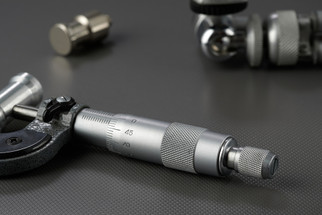
The micrometer tool is indispensable for ultra-fine measurements. Both digital and traditional analog models are necessary for precision-driven fields. Prioritize non-rotating spindles, carbide faces for superior wear resistance, and a reliable ratchet stop or friction thimble to ensure consistent measuring force. Specialized variants, like blade or pitch-diameter micrometers, are mandatory for complex components in aircraft engines or medical devices.
3. Deburring Tool
Every cut creates a burr, and efficient edge finishing is crucial for function and safety. Modern deburring tool systems feature lightweight, ergonomic handles and highly durable, replaceable swivel blades (often made from high-speed steel or carbide-tipped materials). The focus is on a user-friendly design that minimizes hand fatigue and helps with rapid, cost-effective blade changes.
4. Edge Finder
The edge finder is your zero-datum tool for setting up workpieces. While classic mechanical models are reliable, modern electronic edge finders offer a significant leap in speed and accuracy for CNC and manual workflows. These tools activate an LED light or tone when contact is made, allowing for highly repeatable edge location, usually within ±0.0002′′. For VMCs, 3D Tasters are becoming the high-end standard.
5. Magnetic Base Indicator
A top-quality magnetic base indicator is the backbone of any precise setup. The magnetic base must offer enhanced pull strength and flexible articulation (articulating or knuckle joints) for precise positioning on machine columns and tables. When paired with a digital indicator, this setup is perfect for quick, accurate runout and alignment checks, making it crucial for every CNC operator.
6. Precision Dial Indicator
Whether digital or analog, the precision dial indicator (or dial test indicator) is vital for part runout, concentricity, and parallelism inspection. The latest indicators offer a tenth resolution (0.0001′′) and feature jeweled bearings to ensure higher sensitivity and accuracy, a non-negotiable feature for highly accurate machine setup and part inspection.
7. Machinist Square
A foundational machinist tool, the square is used for fundamental squareness and perpendicularity checks. Look for hardened or precision-ground squares, such as those made from heat-treated steel or granite, for long-term stability and warping resistance. Modern squares often have a protective coating or case to maintain their 90-degree angle.
8. Tool Set and Machinist Toolbox
A quality machinist toolbox is the key to organization and tool protection. Look beyond simple storage; the best kits include pre-arranged, guided tool sets with high-quality wrenches, punches, scribes, and pin gauges. Robust, heavy-duty boxes with high-density foam inserts or integrated drawer slides help provide quick access and prevent expensive instruments from being damaged by chips or drops.
9. File Set/Deburring File
A versatile file set is essential for final finishing, blending radii, and removing fine burrs. Prioritize durable, multi-piece kits with cuts (smooth, bastard) and profiles (flat, round, half-round). Ergonomic, anti-slip handles are a must to improve control and reduce the risk of hand slippage during delicate work.
10. Depth Gauge/Height Gauge
A depth gauge or height gauge completes the metrology lineup. It is necessary for multi-axis jobs and checking step features. Features like fine adjustment wheels, large bases for stability, and data port options make these ideal for accurately verifying Z-axis offsets and internal depths.
Buying Guide and Maintenance Tips
To maximize your investment in the best machinist tools:
- Prioritize Quality over Cost: Focus on the long-term ROI. A quality digital caliper that lasts ten years is cheaper than three budget models that fail or lose accuracy after two.
- Ensure Multi-Functionality: Look for tools that can connect to data systems and perform multiple tasks (e.g., a digital height gauge with a depth measuring capacity).
- Regular Calibration is Non-Negotiable: Schedule annual or semi-annual professional calibration for all your precision instruments. Even the best tool is useless if its accuracy isn’t certified.
- Storage: Always return precision tools to their original case or a dedicated drawer in your machinist toolbox. Store them clean and lightly oiled to prevent corrosion.
Final Thoughts
The machining landscape is rapidly moving toward automation and ultra-precision. Your machinist tool set must reflect this shift for successful Fall 2025 project outcomes.
Upgrading your shop with these ten cutting-edge tools ensures you can meet tighter tolerances, streamline setup, and stay competitive. Take the time to audit your old gear and pursue the high-precision, automation-ready toolbox to maximize your shop’s efficiency for years.