Industrial Parts Washers for Modern Machine Shops: Complete Guide to Cleaner, Faster Manufacturing
Industrial Parts Washers for Modern Machine Shops: Complete Guide to Cleaner, Faster Manufacturing

Precision is not merely the absence of error; it is the presence of consistency throughout every stage of the manufacturing lifecycle. We spend millions refining the cutting process, optimizing feed rates, and selecting the highest-grade carbide inserts, yet we often overlook the transition from raw machine output to a finished, verifiable part.
To achieve the absolute standard of 'premium' manufacturing, we must look at our cleaning systems not as utility tools, but as vital components of the engineering chain.
Picture a shop floor in the heart of the American Rust Belt. A technician has just finished a run of intricate manifold blocks. To the naked eye, they are perfect. But beneath the surface, embedded in the microscopic valleys of the metal, lies a cocktail of sulfurized cutting oils, metallic fines, and oxidized grease. If these blocks proceed to the next stage, be it anodizing, plating, or final assembly; the result is a catastrophic failure.
In this guide, we are going to look beyond the cutting edge and focus on the finishing touch. We’re breaking down the world of industrial parts washers, exploring the technical divide between solvent washers and aqueous washers, and helping you decide which cleaning systems will safeguard your shop’s reputation and ROI.
1. The ROI of the "Clean"
When it comes to shop floor efficiency, we often hear a common refrain: "If the machine isn't cutting, it isn't making money." This mindset often leads to cleaning being treated as an afterthought.
However, we must shift our perspective. While high-end machines get the spotlight, it’s the fluid running through them that dictates your return. Everything hinges on the thermal exchange: an exchange that fails if your coolant and parts are compromised by contamination.
When you invest in professional degreasing equipment, you aren't just "washing parts." You are performing a critical stage of quality control. A part that hasn't been properly cleaned is a part that hasn't been properly inspected. You cannot see a hairline fracture through a film of heavy oil. You cannot guarantee the adhesion of a $500-per-gallon aerospace coating if the substrate is "mostly" clean.
Modern industrial parts washers are the gatekeepers of your quality department. They ensure that every dollar you spent on high-precision machining isn't wasted at the final hour.
2. The Traditional Powerhouse: Solvent Washers
For decades, the solvent washer was the undisputed king of the machine shop. Rooted in the early days of industrial manufacturing, these systems use petroleum-based chemicals to dissolve oils and greases on contact.
The chemistry is simple: "like dissolves like." Because most cutting fluids and lubricants are oil-based, a solvent, such as mineral spirits or specialized hydrocarbons, breaks the chemical bond of the contaminant, letting it be rinsed away.
Why shops still choose solvent systems:
- Instant Degreasing: Solvent washers are incredibly effective at cutting through heavy, "baked-on" grease and thick slushes that might resist milder detergents.
- Fast Drying: Most solvents have high volatility, meaning they evaporate quickly. This allows parts to move almost immediately to the next stage of production without the need for a dedicated drying cycle.
- Rust Prevention: Many solvents leave behind a microscopic, non-tacky film that acts as a temporary rust inhibitor, vital for shops working with carbon steels.
However, the "premium" shop of today must weigh these benefits against the modern landscape of safety and environmental regulation. Solvents are often flammable, require careful VOC (Volatile Organic Compound) monitoring, and involve higher disposal costs. For many facilities, the solvent washer remains a specialized tool for the dirtiest jobs, rather than the primary cleaning solution.
3. The Modern Standard: Aqueous Washers
As environmental standards have tightened and worker safety has moved to the forefront, aqueous washers have undergone a technological revolution. No longer are these "just soap and water" systems. Modern aqueous cleaning is a sophisticated science that utilizes heat, chemistry, and mechanical energy.
Aqueous systems use water-based detergents that rely on surfactants. These surfactants work by surrounding the oil molecules and lifting them away from the metal surface, a process known as emulsification.
The Advantages of the Aqueous Approach:
- Safety First: Aqueous solutions are non-flammable and generally much safer for operators to handle. They eliminate the "fume-heavy" atmosphere often associated with traditional degreasing rooms.
- Mechanical Precision: Aqueous cleaning systems often incorporate ultrasonic transducers or high-pressure spray manifolds. Ultrasonic cleaning, in particular, uses "cavitation", the collapse of millions of microscopic bubbles, to scrub clean the deepest threads and internal blind holes that a solvent soak simply couldn't reach.
- Cost Efficiency: While the initial equipment cost may be higher, the long-term "cost per part" is often significantly lower. Water-based detergents are cheaper than high-grade solvents, and disposal is often as simple as neutralizing the pH and filtering out the oils.
4. Degreasing Equipment: Beyond the Tank
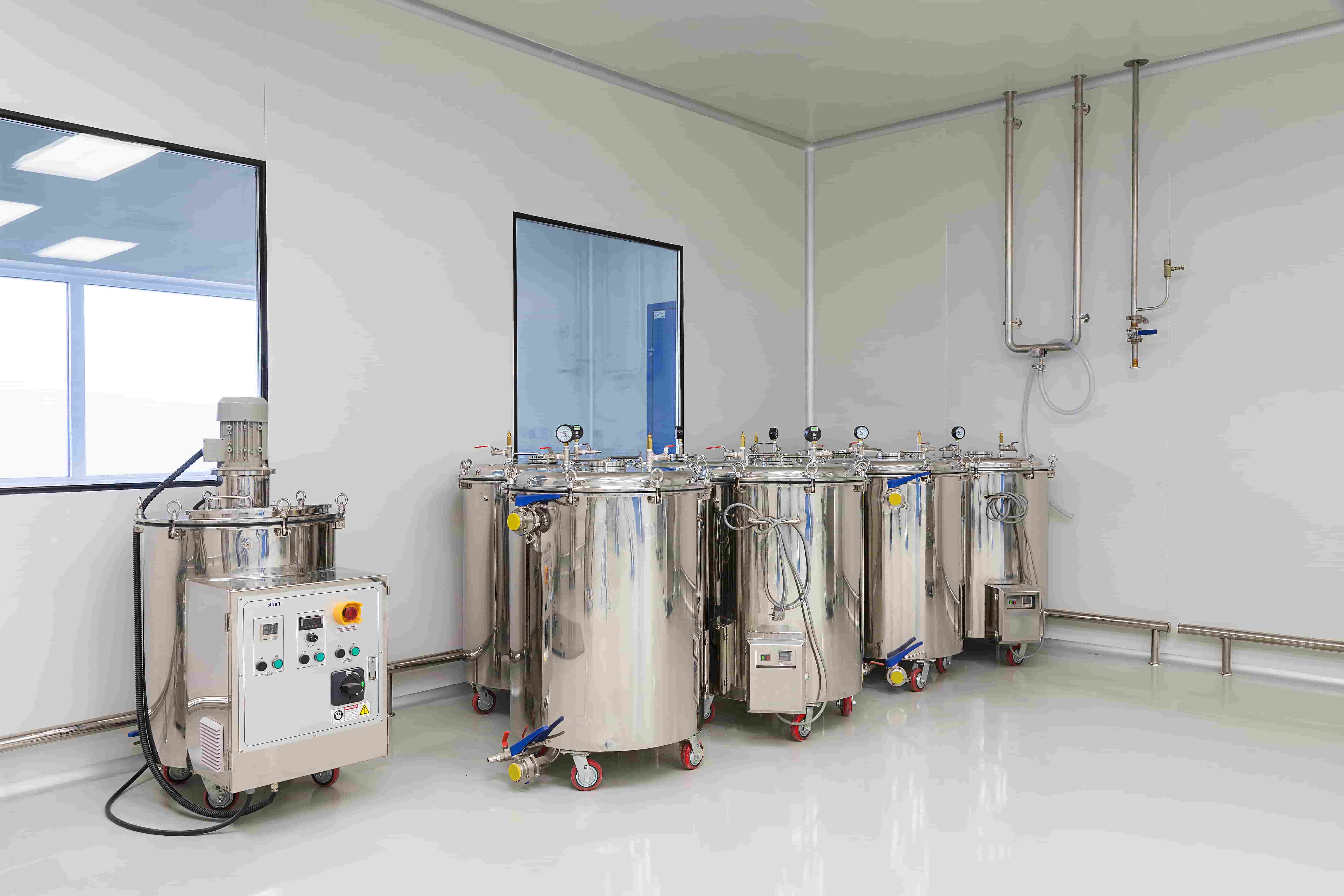
When we talk about degreasing equipment, we are talking about more than just a tub of fluid. The modern machine shop requires a system that integrates into the workflow.
Consider the Automated Spray Cabinet. These function like an industrial dishwasher on steroids. You load a heavy basket of CNC-turned parts, set the timer, and walk away. High-pressure nozzles blast the parts from every angle with heated aqueous solution. This eliminates the labor cost of a technician standing over a sink for three hours a day.
Then there are Conveyorized Systems, the gold standard for high-volume production. Parts move seamlessly from the machining center onto a belt, through a wash zone, a rinse zone, and a flash-dry zone, emerging at the other end ready for the shipping crate.
Choosing the right equipment means looking at your throughput. If your shop is spending more than five hours a week manually scrubbing parts, you are losing money. The transition to automated industrial parts washers isn't just about cleanliness; it’s about liberating your skilled labor to do what they do best: machining.
5. Safety, Compliance, and the Human Element
In the premium USA manufacturing sector, our greatest asset is our people. A clean shop is a safe shop. Traditional cleaning methods often exposed workers to harsh dermatological irritants and respiratory risks.
By investing in enclosed, high-quality cleaning systems, you are demonstrating a commitment to the "Standard of Excellence." Modern units are designed with oil skimmers that automatically separate contaminants from the cleaning fluid, extending the life of the bath and ensuring that the operator is always working with effective chemistry.
Furthermore, with the EPA and OSHA increasing their oversight on industrial waste, having a closed-loop aqueous system isn't just "green", it's a smart business defense. It simplifies your compliance paperwork and protects your facility from the massive fines associated with improper solvent disposal.
6. The Procurement Decision: Finding Your "Zero-Point"
At Penn Tool Co., we have spent decades helping shops find the "Zero-Point"~ that perfect intersection of precision, efficiency, and cost. When it comes to industrial parts washers, your decision should be based on three factors:
- The Substrate: What are the parts made of? (e.g., Aluminum requires pH-neutral cleaners to avoid staining).
- The Contaminant: Are you removing light coolant or heavy-duty drawing wax?
- The Next Step: Is the part going to a customer, or into a paint booth?
If you are producing medical implants, an ultrasonic aqueous system is non-negotiable. If you are rebuilding heavy diesel engines, a high-heat spray cabinet with a heavy-duty solvent may be the only way to move the needle.
Final Thoughts
Precision doesn't end when the spindle stops spinning. The final quality of your work is defined by the state in which it leaves your dock. A part that is dimensionally perfect but chemically "dirty" is a failure in the eyes of a premium client.
Don't let the "invisible saboteur" undermine your engineering. Whether you are looking for a compact solvent washer for a toolroom or a multi-stage aqueous system for a production line, choose equipment that reflects the same standard of precision you demand from your CNC machines.
Frequently Asked Questions (FAQ)
1. What is the main difference between solvent and aqueous parts washers?
Solvent washers use petroleum-based chemicals to dissolve oil and grease on contact; they dry quickly but require strict fire safety and VOC management. Aqueous washers use water-based detergents and heat to lift contaminants. Aqueous systems are generally safer, more environmentally friendly, and better for ultrasonic cleaning applications.
2. Can industrial parts washers damage sensitive materials like aluminum or brass?
Yes, if the chemistry is wrong. High-alkaline detergents used in some aqueous washers can etch or discolor "yellow metals" and aluminum. It is vital to use pH-buffered solutions specifically formulated for non-ferrous metals to maintain the surface integrity and aesthetic finish of the parts.
3. How does ultrasonic cleaning work within a parts washer?
Ultrasonic cleaning systems use high-frequency sound waves to create "cavitation bubbles" in the fluid. When these bubbles implode against the part's surface, they create a scrubbing action that reaches into microscopic crevices and blind holes that spray nozzles or brushes simply cannot access.
4. Is it worth upgrading to an automated cleaning system?
Absolutely. If your technicians spend more than an hour a day manual washing, an automated spray cabinet or conveyor system will pay for itself in labor savings alone. Automation also ensures a "repeatable clean," removing the human error of inconsistent manual scrubbing and improving overall QC.
5. How do I handle the waste generated by my industrial parts washer?
For solvent washers, waste must be collected by a certified hazardous waste hauler. For aqueous washers, many shops use "oil skimmers" to remove the floating oils, allowing the remaining water to be evaporated or neutralized and safely discharged, significantly reducing disposal costs and environmental impact.