Material Handling Equipment for Machine Shops: A Complete Guide
Material Handling Equipment for Machine Shops: A Complete Guide

Material Handling Equipment for Machine Shops: Reduce Injuries and Downtime
Walk the floor of any busy machine shop and the pattern is clear: a technician maneuvering a fixture plate onto a mill table, raw bar stock stacked against a bay wall, an operator carrying a finished part across the building because the nearest cart is nowhere in sight. These small manual handling tasks, repeated across every shift, are one of the most predictable and most preventable sources of lost-time injuries and unplanned downtime on a production floor.
For over five decades, Penn Tool Co. has supplied American manufacturers with the industrial-grade hardware they need to run safe, efficient shops. Every part that moves through your facility has to be lifted, carried, or rolled by someone, and how well that person is equipped determines whether your shop runs on schedule or runs on luck. That's the real value behind material handling equipment: it rarely gets the same attention as a new machine tool, but it's often the investment with the fastest payback.
The Overlooked Hazard: Where Machine Shop Injuries Really Start
Overexertion, strains, and dropped-load incidents remain among the leading causes of lost workdays in manufacturing environments. Machine shops carry more than their share, since workpieces are heavy, dense, and often awkwardly shaped, and they're moved repeatedly between staging, machining, inspection, and shipping.
Here’s what manual handling actually costs a shop:
- Machines sit idle while an injured operator recovers
- Rush orders slip a day, sometimes more
- Workers' comp claims follow a business for years
- Near-misses go unreported but still cause fatigue and slowdowns
- Dropped or mishandled parts become rework that eats into margin
A shop that invests in proper handling of its infrastructure isn't just protecting its people; it's protecting its own throughput.
The Lift Before the Cut: Getting Loads Positioned Safely
Before a part ever reaches a spindle, it usually has to be lifted, positioned, or rotated into place. This is where dedicated lifting tools earn their keep. Penn Tool Co.'s material lifting equipment line covers this ground end to end.
Core lifting tools every shop should have on the floor:
- Jib cranes swing heavy castings directly over a mill table instead of carrying them by hand
- Gantry arms: mobile lifting support for bays without a fixed mounting point
- Work positioners tilt and rotate a fixture into the right orientation, saving an operator from bending or twisting
- Lifting tables raise a load to working height without repeated manual lifting
- Slings, straps, and hoist rings from our lifts and lifting aids collection secure a load once it's off the ground
A workpiece guided by a properly rated lifting fixture stays controlled from pickup to placement, protecting the part as much as the person carrying it.
The Vertical Lift Problem: Why Hoists Belong on Every Floor
For anything approaching or exceeding a comfortable two-person lift, hoists are the standard answer. Browse our hoists and accessories selection for everything from manual chain hoists to electric trolley systems.
|
Hoist Type |
Best For |
Watch Out For |
|
Manual Chain Hoist |
Occasional, lighter-duty lifts |
Slower cycle time, more operator fatigue on repeat lifts |
|
Wire Rope Hoist |
Higher-capacity, precision-controlled lifts |
Requires regular cable inspection |
|
Electric Trolley Hoist |
Frequent, repetitive lifts |
Higher upfront cost, but fastest payback on daily-use bays |
The one rule that prevents most hoist incidents: Size the hoist for your heaviest anticipated load, not your average one. A hoist rated for a typical Tuesday will fail you the day a bigger job comes through, and that's usually the day it matters most.
The Arteries of the Shop: Carts, Dollies, and Transport Flow
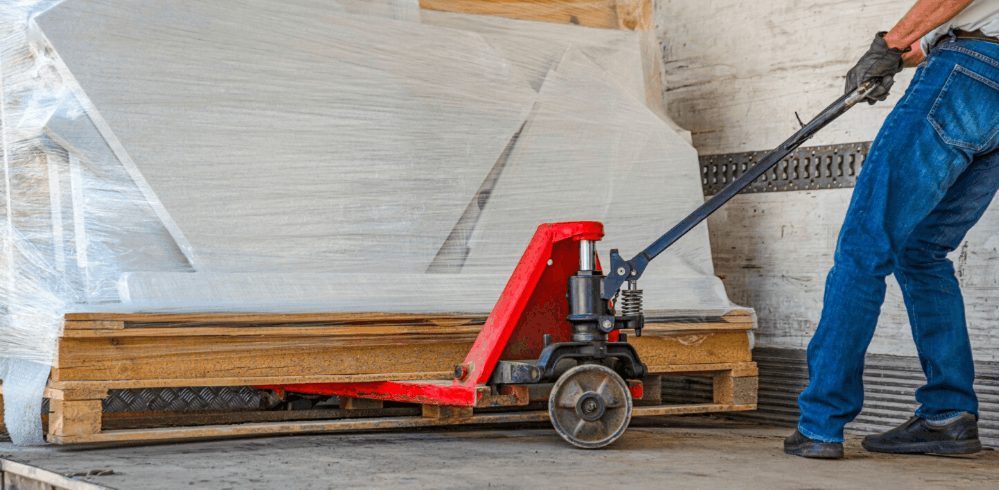
Lifting a part is only half the equation. Getting it from the machine bay to inspection, and from inspection to packing, is where shop carts come in.
Where to deploy carts across a shop:
- Heavy-duty, load-rated carts with locking casters: From our carts, dollies, hoppers, trucks and Accessories category, for moving work-in-progress between stations
- Service carts: From our service carts and accessories line, for lighter, everyday moves around the shop
- Dollies and hand trucks: For quick, single-part moves near a workstation
At a facility level, this is a material transport question. A shop that maps its flow, raw stock intake through finishing and shipping, and equips each stage with the right cart, dolly, or conveyor from our full material transport range, moves work faster and with far fewer near-misses.
One placement rule matters more than the equipment itself: A cart that's always three bays away from where it's needed gets ignored in favor of a manual lift. Keep transport equipment close enough that using it is the easy choice, not an extra errand.
Matching Equipment to the Station
Not every station needs the same handling setup. Over-equipping one bay while under-equipping another wastes the budget without closing the actual risk.
|
Shop Area |
Load Pattern |
Recommended Equipment |
|
CNC / Mill Bay |
Heavy, infrequent lifts (castings, fixtures) |
Jib crane + hoist combination |
|
Grinding / Finishing Bay |
Lighter parts, high frequency |
Fleet of well-placed carts |
|
Shipping and Receiving |
Bulk, high-volume moves |
Dollies, hand trucks, dock-level transport |
|
Inspection |
Precision handling, low volume |
Work positioners, lifting tables |
Walk your own floor the way a new hire would. Watch where people improvise, where a part gets carried further than it should, or where two people are doing a job one person could do alone with the right equipment. Those moments show exactly where a handling upgrade pays off fastest.
Habits That Outlast Any Piece of Equipment
Equipment alone doesn't prevent injuries; it has to be paired with training and consistent use. Workplace safety in a material handling context comes down to a short list of repeatable habits:
- Train operators on proper lifting technique and rated equipment limits
- Keep transport paths clearly marked and unobstructed
- Inspect slings, chains, and casters routinely, before they're trusted with a heavy load
- Repeat safety talks periodically, not just once at onboarding
- Store loose material properly using our material handling and storage bins and racking systems
Shops that build these into a daily routine, rather than an annual checkbox, see the payoff directly: fewer strain injuries, fewer damaged parts, and fewer surprises on the production schedule.
Why This Investment Pays for Itself
It's easy to file material handling equipment under "nice to have" when a new machine tool is competing for the same budget. The math usually favors handling upgrades more than shops expect.
The real cost comparison:
|
Cost of a Single Lost-Time Injury |
Cost of Prevention |
|
Medical costs and workers' comp |
One-time jib crane or hoist purchase |
|
Lost productivity during recovery |
Ongoing maintenance (minor) |
|
Temporary coverage and retraining |
Equipment often lasts decades |
|
Damaged parts from unstable manual carries |
Reduced rework and scrap |
A well-maintained hoist or jib crane can run for decades with basic upkeep, which means the investment keeps paying dividends long after the purchase price is forgotten.
The Shop Floor Handling Toolkit, at a Glance
|
Equipment Type |
Machine Shop Function |
Critical Maintenance Check |
|
Lifting Tools (jibs, arms, gantries) |
Controlled positioning of heavy workpieces |
Inspect mounting hardware and swing mechanism for wear |
|
Hoists |
Vertical lift of loads beyond manual capacity |
Verify load rating; check chain/cable for kinks or fraying |
|
Shop Carts |
Moving work-in-progress between stations |
Check caster mobility and load-bed integrity |
|
Transport Equipment |
Facility-wide material flow |
Keep transport paths clear and clearly marked |
Pro Buyer Tips for Material Handling
- Rate for the heaviest load, not the average one: Undersized lifting equipment is one of the most common causes of preventable incidents.
- Keep transport paths clear by design, not by policy: A cart staged in a walkway is a hazard no matter how many signs are posted.
- Inspect before every heavy lift: A five-second check of hooks, chains, and casters catches problems before they become incidents.
- Place equipment where the work actually happens: A cart or hoist that's inconvenient to reach gets skipped in favor of a manual lift.
- Budget handling equipment alongside machine purchases, not after them: A new CNC cell isn't fully equipped until the lifting and transport setup around it is too.
Protect Your People, Protect Your Production
A shop's output is only as reliable as the people moving the work through it. Investing in proper lifting, hoisting, and transport equipment isn't overhead; it's insurance against lost workdays, damaged parts, and schedule slippage.
At Penn Tool Co., we've spent decades helping American manufacturers build shops that run safely and efficiently from the loading dock to the shipping bay. Browse our material lifting equipment and material transport collections, or reach out to our team directly for help specifying the right handling setup for your floor.
Frequently Asked Questions
What's the difference between lifting tools and hoists in a machine shop?
Lifting tools are the fixed or mounted hardware, such as jib arms and gantry frames, that position and guide a load. Hoists are the mechanism attached to that hardware that actually raises and lowers the weight. Most shop lifting setups pair the two together.
When does a part need to be moved with a hoist instead of by hand?
Anything approaching or exceeding a comfortable two-person manual lift should be handled with a rated hoist. Shops that size equipment for their heaviest anticipated load, rather than a typical day-to-day part, avoid the improvised lifts that cause most handling injuries.
How do shop carts reduce workplace injuries?
Load-rated carts with locking casters cut down on the number of trips an operator makes carrying parts by hand and keep work-in-progress off the floor, reducing both strain injuries and tripping hazards.
What should a shop check before relying on lifting equipment?
Mounting hardware, chains or cables, hooks, and caster mobility should be inspected before any heavy lift. A quick pre-lift check catches wear or damage before it results in a dropped load.
Is it worth upgrading to electric hoists instead of manual ones?
For stations with frequent, repetitive lifts, electric hoist and trolley systems typically pay for themselves through reduced cycle time and reduced operator fatigue. Manual hoists remain reasonable for occasional, lighter-duty lifts.
How should a shop decide where to invest in material handling equipment first?
Look for the points on the floor where operators currently improvise, carry parts further than they should, or need a second person to complete a lift. Those recurring pain points show where an upgrade will reduce injuries and downtime fastest.