The Pulse of Production: A Guide to Power Transmission Components
The Pulse of Production: A Guide to Power Transmission Components

Every machine in your shop relies on the seamless transfer of torque. When power transmission components are specified correctly, the result is smooth, quiet, and reliable production. On the contrary, poorly chosen components lead to excessive vibration, frequent maintenance, and unplanned downtime. In this guide, we strip away the complexity to focus on what actually drives your machinery: selecting the right belts, pulleys, and drives to ensure your facility runs at its peak performance.
Picture a massive, automated bottling line. Thousands of units pass through each hour, synchronized by a series of drives that must maintain perfect timing. Or consider a high-torque CNC machining center where a spindle must rotate with absolute stability under extreme load. In both scenarios, the motor provides the power, but the delivery, i.e., the way that power is moved, geared, and managed, is where efficiency is either won or lost.
If your power transmission setup is inefficient, you aren't just losing energy but also precision. Vibration, slip, and heat are the enemies of quality control. As professionals in the manufacturing space, we often get caught up in the output of the machine, but the true secret to longevity and performance lies in the drive train.
At Penn Tool Co., we understand that choosing the right power transmission components is a strategic decision that affects your bottom line, your maintenance schedule, and your overall facility throughput. Today, we’re going to break down the fundamentals of the industrial drive—chains, belts, pulleys, and sprockets—to help you make the right procurement decision for your facility.
1. The Belt Drive: The Silent Communicator
For many applications, particularly those requiring smooth, quiet operation at higher speeds, the belt drive is the gold standard. Unlike rigid systems, belts offer a level of flexibility that can absorb shock and protect your motor from catastrophic overload.
The Evolution of Belts:
- V-Belts: The workhorses of the industry. They use friction to transmit power, wedging themselves into the grooves of a pulley to gain grip. They are incredibly reliable and easy to install.
- Synchronous (Timing) Belts: These are the precision kings. Featuring teeth that mate directly with a pulley, they eliminate the "slip" found in friction drives. If your machine requires synchronized timing, like a robotic arm or a packaging indexer, timing belts are the only logical choice.
When choosing belts, don't just match the length and width. Consider the material. High-grade aramid or carbon-fiber-reinforced belts can handle significantly higher torque without stretching. Stretching is the silent killer of efficiency; as a belt elongates, it loses its tension, leading to heat buildup and premature failure.
2. The Chain Drive: The Heavyweight Champion
When the environment turns harsh, or the torque requirements exceed what a belt can handle, we turn to chains and sprockets. There is a raw, mechanical honesty to a chain drive. It is positive, robust, and capable of handling incredible loads.
Why choose a chain drive?
- Zero Slip: Because a chain is a physical link between two shafts, there is no slippage, even at high torque.
- Durability: In high-heat environments or areas where oils and chemicals might cause belts to degrade, a high-quality steel chain will keep performing.
- Versatility: You can increase the power-handling capability of a chain drive simply by moving from a single-strand to a multi-strand chain without changing the entire architecture of the machine.
The trade-off for this robustness is maintenance. Chains require lubrication to prevent wear between the pins and bushings. Furthermore, as they wear, they "pitch lengthen" (stretch), making periodic adjustment or replacement unavoidable. If your shop environment is filled with metallic dust or abrasive grit, those particles will act like grinding compound on your chain. For such demanding applications, investing in extended-wear or sealed-lube chains is a clear win. You’ll save significantly on maintenance costs by keeping your machines running longer.
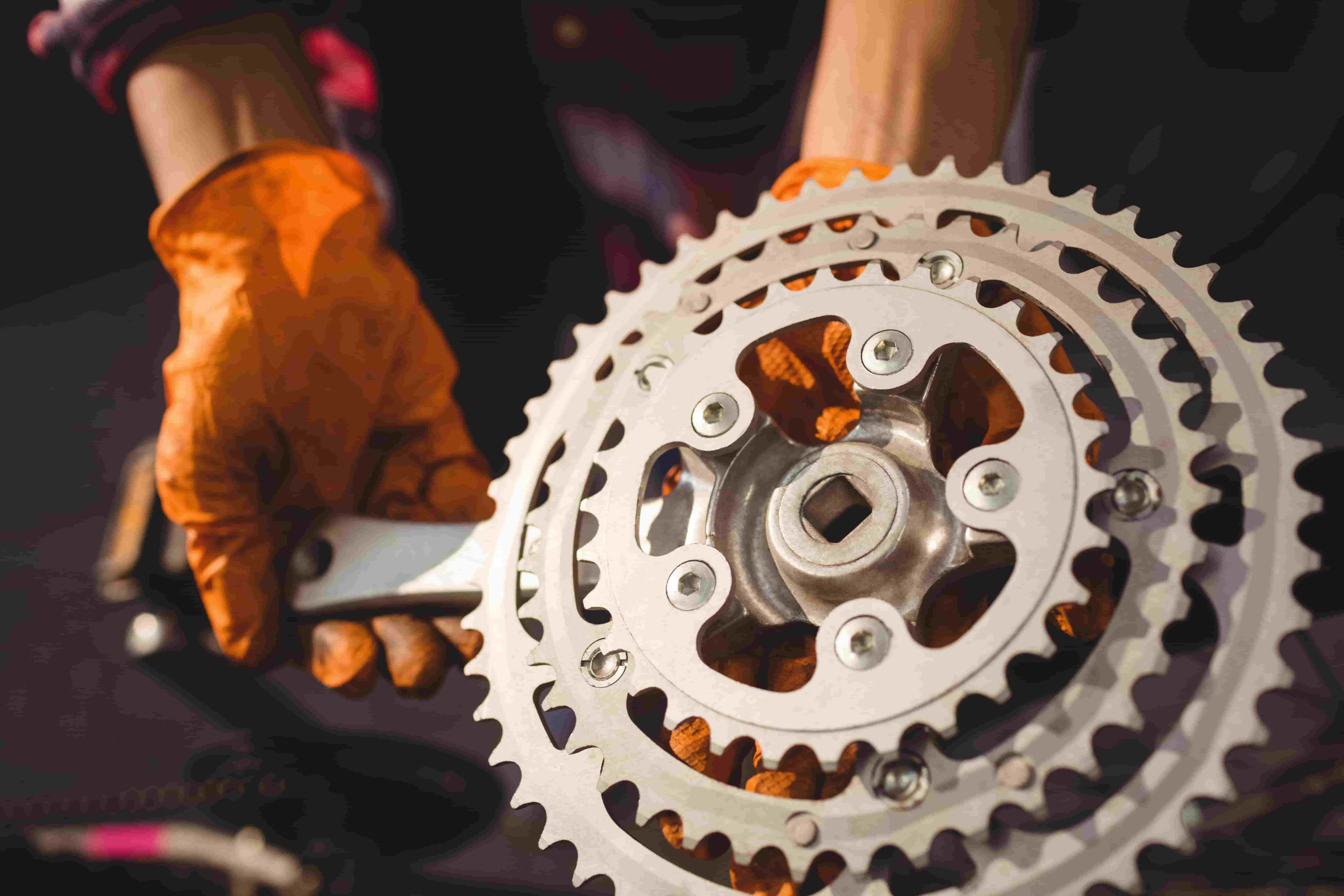
3. Pulleys and Sprockets: The Geometry of Power
You can have the best belt or chain in the world, but if your pulleys or sprockets are misaligned, your drive system will fail prematurely.
When it comes to industrial drives, alignment is everything. Think of it like the alignment on your car; if it’s off by a fraction of a degree, your tires wear out in a fraction of the time. Misaligned pulleys cause uneven load distribution across the width of the belt, leading to frayed edges and cord separation.
Selecting the right components:
- Sprocket Material: Are you using hardened steel or cast iron? For high-shock applications, a hardened steel sprocket is essential to prevent tooth deformation.
- Pulley Surface: For high-friction V-belt applications, ensure your pulleys are free of nicks or burrs. Even a small scratch acts like a saw blade against the rubber sidewall of your belt.
When procuring these components, always look for those with taper-lock bushings. They provide a much tighter, more concentric fit to the shaft than simple set-screw pulleys, which can vibrate loose under heavy load.
4. The Science of Slip vs. Grip
Choosing between a belt and a chain often comes down to a fundamental question: Do you need a "fuse," or do you need a "lock"?
If your machine is prone to sudden jams, a belt drive can act as a safety fuse; if the machine stalls, the belt may slip, potentially saving the motor from burning out. However, if your machine requires exact synchronization, where even a millisecond of lag results in a defective part, you need the absolute lock of a chain or a synchronous belt.
For premium facilities, we often see a hybrid approach. Precision robotic indexing uses synchronous belts, while heavy-duty raw material transport uses high-strength roller chains. Analyzing your machine’s "failure mode" is the best way to choose the right transmission path.
5. Why "Premium" Matters in Power Transmission
It’s easy to view a belt or a sprocket as a commodity~ just a part number on a shelf. But in the context of a 24/7 manufacturing line, the "cheap" component is almost always the most expensive one.
Low-quality power transmission components often have subtle manufacturing defects:
-
Imprecise Pitch: If the spacing between sprocket teeth is off by even a few thousandths of an inch, the chain will "chatter," creating vibration that radiates through your entire machine.
-
Substandard Alloys: Cheap steel under high-load cycles will fatigue and crack.
-
Poor Heat Treatment: A sprocket that hasn't been properly hardened will lose its tooth profile in months, not years.
Investing in top-tier components ensures that your drive system runs cooler, quieter, and longer. It means less time spent on "firefighting" maintenance and more time spent on value-added production.
Conclusion: Engineering the Connection
Power transmission is the connective tissue of your factory. It takes the raw electrical energy of a motor and transforms it into the deliberate, controlled motion that creates your product.
Whether you are configuring a delicate high-speed drive or a heavy-duty industrial transmission, remember: your system is only as reliable as its weakest link. By matching the right belts, pulleys, chains, and sprockets to your specific load, speed, and environmental requirements, you are doing more than just buying parts. It is as good as engineering reliability into every cycle.
At Penn Tool Co., we are committed to providing the precision components that keep American industry moving. When your production depends on the perfect connection, choose the components that are engineered to deliver.
Frequently Asked Questions (FAQ)
1. How do I know when to switch from a belt drive to a chain drive?
Switch to a chain drive when your torque requirements exceed the physical capabilities of a belt, or when the operating environment (extreme heat, oil, or grit) would cause belt degradation. Chains are better for high-torque, low-to-medium speed applications, while belts excel at high-speed, smooth, and quiet operation.
2. What is the most common cause of power transmission failure?
Misalignment. Even the highest-quality industrial drives will fail if the pulleys or sprockets are not perfectly aligned. Misalignment creates excessive side-loading on bearings and uneven wear on the belt or chain. Always use laser alignment tools to ensure your drive components are perfectly parallel.
3. Why is my belt stretching so quickly?
While all belts have some initial "stretch" during the break-in period, rapid elongation usually indicates either an undersized belt for the application or high operating temperatures. Ensure your belt is rated for the torque load of your motor, and verify that your guards allow for proper ventilation to prevent heat buildup.
4. Are synchronous belts really better than V-belts?
It depends on the application. Synchronous belts are better for precision timing and indexing where slip cannot be tolerated. However, V-belts are often preferred in applications with high-shock loads because they can slip slightly under extreme stress, protecting the motor and drivetrain from damage.
5. How often should I inspect my chain and sprocket system?
In a high-duty cycle facility, you should perform a visual inspection weekly. Look for signs of "kinking" in the chain, excessive slack, or visible wear on the sprocket teeth (such as "hooking" or thinning). Regularly checking the lubrication film on the chain and the alignment of the sprockets can increase the life of your drive system by 50% or more.