Carbide vs Cobalt vs HSS Drill Bits: Which Is Best for Metal?
Carbide vs Cobalt vs HSS Drill Bits: Which Is Best for Metal?

Choosing the right metal-drilling bit is about a lot more than just grabbing the correct diameter off the rack. The bit’s material dictates how well that cutting edge survives scorching heat, relentless friction, and heavy cutting forces. A drill bit that slices through mild steel like butter might dull, overheat, or shatter the second it touches stainless steel, titanium, or hardened alloys.
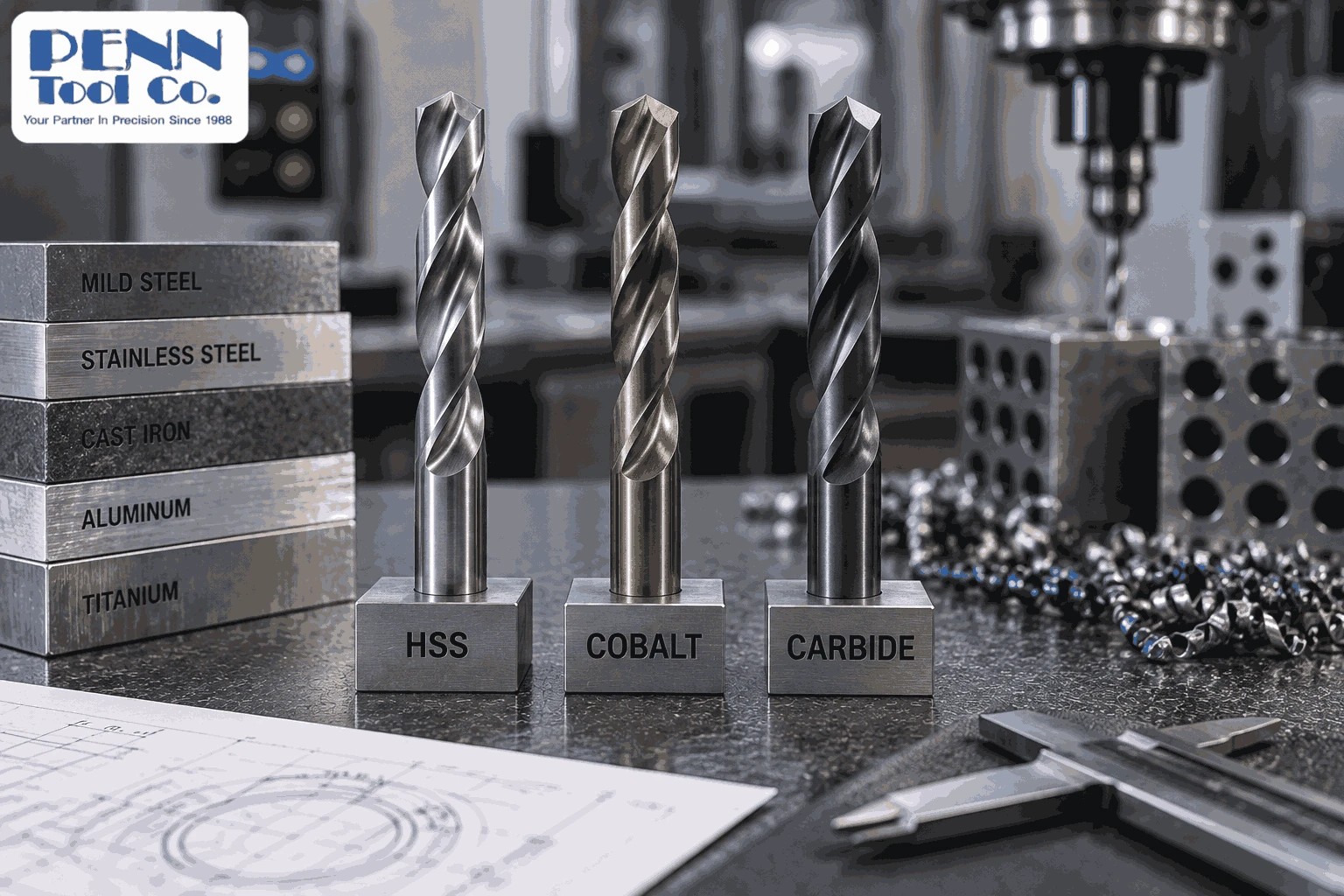
That makes your drill bit material the single most critical choice in any metalworking job. High-Speed Steel (HSS drill bits), cobalt, and solid carbide each strike a different balance between toughness, hardness, heat resistance, cutting speed, and overall cost:
- HSS (High-Speed Steel): The versatile, budget-friendly workhorse for everyday mild steels and soft metals.
- Cobalt: The heat-resistant step-up engineered to punch through tough stainless steel and hard alloys without burning out.
- Solid Carbide: The ultimate high-speed option built for rigid CNC setups, extreme hardness, and maximum production life.
For machinists, fabricators, and maintenance crews, matching the bit to the metal is the secret to avoiding burnt edges, off-spec holes, and wasted tooling dollars.
At Penn Tool Co., we stock a full arsenal of industrial drill bits tailored for heavy fabrication, high-volume production, and everyday repair work. Whether you need flexible HSS, heat-fighting cobalt, or high-performance solid carbide, finding the perfect tool starts right here.
Why Your Choice of Bit Material Makes or Breaks the Job
A drill bit must survive intense friction, heat, and cutting forces while keeping a razor-sharp edge. The harder, tougher, or more abrasive the metal, the more critical your bit material becomes.
Using the wrong bit isn't just inefficient, it directly hurts your shop's bottom line by causing:
- Excessive Heat and Rapid Wear: Dulls the cutting edge long before its time.
- Premature Tool Failure and Breakage: Increases scrap rates and leads to costly downtime.
- Poor Hole Tolerances and Rough Finishes: Requires secondary operations to fix.
The 3 Core Materials: Quick Breakdown
- HSS (High-Speed Steel): The reliable, budget-friendly workhorse for everyday mild steels, aluminum, and softer metals.
- Cobalt (M35/M42): Engineered with superior heat and wear resistance to punch through tough stainless steel, cast iron, and high-temp alloys.
- Solid Carbide: Delivers exceptional hardness and extreme heat resistance for high-speed CNC production, hardened steels, and abrasive non-ferrous materials.
The right choice comes down to your workpiece material, machine rigidity, cutting speeds, and target tool life.
Breaking Down the Big Three: HSS, Cobalt, and Solid Carbide
01 | HSS Drill Bits: The Versatile Shop Standard
High-speed steel remains one of the most practical choices for everyday drilling. It provides a useful combination of toughness, hardness, affordability, and versatility.
- What You Get: HSS bits are economical and available in an extensive range of sizes and configurations. Penn Tool Co.'s Morse H.S.S. & Cobalt Drill Sets provide convenient options for shops that need multiple sizes for routine work.
- How Your Shop Uses It: HSS works particularly well for mild steel, aluminum, brass, plastics, and other relatively easy-to-machine materials. It is a strong choice for maintenance departments, fabrication shops, repair work, and general machining.
- Why It Drives ROI: You do not need premium tooling for every hole. When the material is relatively soft and cutting conditions are moderate, HSS provides reliable performance without the higher cost associated with carbide.
02 | Cobalt Drill Bits: The Heat-Resistant Choice for Tough Metals
Cobalt drill bits are essentially an upgraded HSS solution. Adding cobalt to the alloy improves hot hardness, letting the tool maintain its cutting performance at elevated temperatures.
- What You Get: Cobalt provides greater heat and wear resistance than standard HSS. Penn Tool Co.'s Precise Cobalt Jobbers Length Twist Drills are designed for demanding materials including stainless steel, alloys, titanium, and Inconel.
- How Your Shop Uses It: Cobalt is particularly useful when drilling stainless steel and other difficult-to-machine alloys where heat can quickly damage conventional HSS tooling.
- Why It Drives ROI: Cobalt costs more than standard HSS, but its improved durability can reduce frequent tool changes and improve consistency when working with difficult materials.
03 | Carbide Drill Bits: Maximum Hardness for Demanding Applications
Solid carbide represents another major step up in cutting performance. Carbide is exceptionally hard and maintains its properties at high temperatures, making it suitable for high-speed machining and difficult materials.
- What You Get: Carbide drills can operate at significantly higher speeds than conventional HSS tooling when the machine, workholding, and cutting conditions support them. Penn Tool Co.'s M.A. Ford Solid Carbide Jobbers Length Twist Drills are designed for steel, stainless steel, high-temperature exotic materials, non-ferrous metals, cast iron, and hard materials.
- How Your Shop Uses It: Carbide is ideal for CNC machining, production environments, hardened materials, and applications where speed and dimensional consistency are priorities.
- Why It Drives ROI: Although carbide carries a higher initial cost, its ability to handle higher speeds, heat, and demanding applications can make it economical in production environments.
Your Quick Guide
Each drill bit material is designed for different levels of heat, hardness, and cutting demand. Use this quick comparison to identify the right option for your metalworking application.
|
Factor |
HSS |
Cobalt |
Carbide |
|
Best For |
General-purpose drilling |
Tough, heat-generating metals |
High-speed, demanding machining |
|
Heat Resistance |
Good |
Excellent |
Exceptional |
|
Wear Resistance |
Good |
Very Good |
Excellent |
|
Toughness |
High |
High |
Lower |
|
Speed Capability |
Moderate |
High |
Very High |
|
Cost |
Lower |
Moderate |
Higher |
|
Ideal Materials |
Mild steel, aluminum |
Stainless steel, titanium, alloys |
Hardened steel, exotic alloys |
|
Key Advantage |
Versatile and economical |
Durable under heat |
High-speed and long-lasting |
Pro Tip: Choose HSS for everyday drilling, cobalt when heat and tougher metals are involved, and carbide when high speed, precision, and demanding machining conditions are the priority.
From Mild Steel to Inconel: How to Match Your Bit to the Alloy
- Mild Steel: HSS is the first choice for mild steel. It offers good cutting performance and economical tool life. Cobalt can be used when drilling larger holes or when longer tool life is important.
- Stainless Steel: Stainless steel generates considerable heat and can work-harden if drilled incorrectly. Cobalt is generally a better choice because of its superior heat resistance. Penn Tool Co.'s Euroboor 29 Piece Cobalt Drill Bit Set provides 5% cobalt HSS drills with a 135° point for hard materials and high-alloy steel.
- Aluminum: HSS works well for most aluminum drilling applications. Carbide can become attractive for high-speed CNC production where increased cutting speeds and tool life matter.
- Cast Iron: HSS and cobalt can both work effectively with cast iron, depending on hardness and application. Carbide is an excellent choice for production machining and demanding conditions.
- Titanium: Titanium requires careful heat management because excessive heat can quickly shorten tool life. Cobalt is often an effective choice because of its heat resistance. Carbide can provide higher performance on rigid CNC equipment.
- Hardened Steel: As hardness increases, conventional HSS becomes less practical. Carbide is generally the better choice for demanding hardened-steel applications, provided the machine setup is rigid and stable.
- Inconel and High-Temperature Alloys: High-temperature alloys create challenging drilling conditions because they resist cutting and retain heat. Cobalt can handle many of these applications, while carbide is preferable when higher productivity and controlled CNC machining are required.
5 Ways You’re Accidental Destroying Your Cutting Edges
- Running the Wrong Speed: Excessive RPM can generate unnecessary heat and rapidly wear the cutting edge.
- Using Too Little Feed: A drill that rubs instead of cutting generates heat without efficiently removing material.
- Ignoring Work Hardening: Materials such as stainless steel can become harder when improperly drilled. Maintain positive cutting action.
- Poor Workholding: Movement and vibration can damage especially brittle carbide tooling.
- Choosing the Wrong Bit Material: Using standard HSS on a demanding alloy may result in premature failure, while using carbide for simple maintenance work may unnecessarily increase tooling costs.
The Pro Checklist: 5 Questions to Ask Before You Buy
Before purchasing a drill, ask five questions:
- What material am I drilling?
- How hard is the material?
- What machine will I use?
- How many holes need to be produced?
- Is speed, tool life, or low cost the primary priority?
For occasional drilling in mild steel, HSS is usually the practical answer. For stainless steel, titanium, and tougher alloys, cobalt provides a strong balance between performance and cost. For high-speed CNC production and difficult materials, carbide can deliver the performance needed to justify its higher price.
Equip Your Shop for Precision: Find the Right Bits at Penn Tool Co.
There is no single drill bit material that is best for every application. HSS remains an excellent all-around choice, cobalt provides additional heat resistance for difficult metals, and carbide delivers maximum performance when machining conditions support it.
The smartest approach is to build your tooling around the materials your shop handles most often. Keep HSS available for everyday work, use cobalt for heat-sensitive and difficult alloys, and reserve carbide for high-performance machining and demanding production applications.
With the right combination of drill material, point geometry, cutting parameters, coolant, and machine setup, your shop can improve hole quality while extending tool life.
Penn Tool Co. offers a broad selection of metalworking drill bits and precision tooling for different materials and machining requirements. Whether you need dependable HSS tooling, heat-resistant cobalt drills, or high-performance solid carbide options, choosing the right tool for the job can make every drilling operation more productive.
Frequently Asked Questions
Is carbide better than cobalt for drilling metal?
Carbide offers superior hardness, extreme heat resistance, and higher speed capabilities for production machining, whereas cobalt provides greater structural toughness and shock resistance. The ideal choice depends on your specific workpiece material, setup rigidity, and target cycle time.
Are cobalt drill bits better than HSS?
Cobalt bits provide significantly higher heat and wear resistance than standard HSS, making them superior for punching through abrasive stainless steel and tough alloys. However, standard HSS remains far more economical for routine, general-purpose drilling in milder metals.
What drill bit is best for stainless steel?
Cobalt drill bits are the standard choice because stainless steel generates intense heat and work-hardens quickly under friction. For high-volume CNC production runs with rigid workholding, solid carbide bits deliver faster cycle times and vastly superior tool life.
Can carbide drill bits be used on hardened steel?
Yes, solid carbide bits excel at drilling hardened steels due to their extreme hot hardness. Success requires a highly rigid machine setup, precise speeds and feeds, and steady pressure to prevent edge chipping or catastrophic tool breakage during engagement.