Reliable Machinist Tools and Machine Shop Equipment
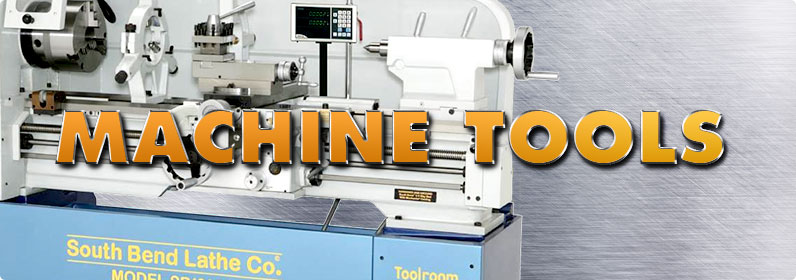
Machine tools include a variety of products that are used to shape, cut, grind, shear, and form metal into a desired part. This is accomplished by removing metal chips in the workpiece.
These highly technical and advanced industrial shop tools and machines can be operated in different ways, depending on the model. They may be manually operated, or powered electronically, pneumatically, or hydraulically.
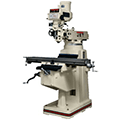
Since 1968, Penn Tool Co. has offered a diverse line of industrial machine tools online. Some of the more popular examples include lathes, grinding machines, drill presses, milling machines, and many more.
Defining Machinist Tools
Machinist tools is a broad term covering the instruments and machinery machinists rely on to measure, cut, and finish metal and other materials. This includes everything from precision measuring instruments used to check tolerances, to the machine shop tools that power a shop's core operations, including lathes, mills, drill presses, grinders, and more.
While "machinist tools" refers to the full range of equipment a machinist might use on the job, "machine shop tools" more specifically describes the powered machinery, such as lathes, milling machines, and grinding machines, that forms the backbone of a working machine shop.
How Machine Shop Tools Work
Machine shop tools work by removing material from a workpiece, typically metal, though some machines are designed for wood or other materials. The material is extracted and shaped until it reaches a desired size or finish. Depending on the machine, this material removal is accomplished through cutting, grinding, or drilling.
Some machine shop tools, such as manual lathes and drill presses, require an operator to control feed rate and positioning directly. Others, such as CNC machines, follow programmed instructions to automate these same movements with a high degree of precision and repeatability.
Power sources vary by machine as well, with tools designed to run manually or via electric, pneumatic, or hydraulic systems, depending on the application and the force required.
Key Considerations
Choosing the right machinist tools and machine shop tools depends on the specific demands of your shop, factory, or garage. Consider the following:
1. Material Type: Confirm the machine is designed to work with the materials you're machining, such as ferrous metals, non-ferrous metals, or wood.
2. Precision Requirements: Applications with tight tolerances may call for CNC machines or precision digital readout equipment.
3. Production Volume: High-volume, repetitive production often benefits from CNC automation, while manual machines may be more practical for low-volume work.
4. Power Source: Consider whether a manual, electric, pneumatic, or hydraulic machine best fits your shop's setup and available utilities.
5. Workspace and Safety: Account for available floor space, ventilation, and other safety needs.
6. Maintenance and Durability: Look for machines built to withstand your shop's workload with manageable long-term maintenance requirements.
Types of Machine Shop Tools
Familiarize yourself with various types of machine tools based on your shop’s needs and requirements.
|
Category
|
Includes
|
What It's Used For
|
|
Cutting & Shaping Machines
|
|
Removing or reshaping material through cutting, turning, milling, forming, or erosion to create a desired part
|
|
Finishing Machines
|
|
Smoothing, sharpening, or refining a part's surface and edges after machining
|
|
Drilling & Tapping Equipment
|
|
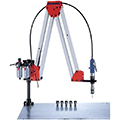
Drilling, enlarging, countersinking, counterboring, and threading holes in a workpiece
|
|
Marking & Measurement Equipment
|
|
Marking, engraving, or measuring parts with precision
|
|
Support & Safety Equipment
|
|
Supporting machine performance and protecting equipment and operators
|
|
Woodworking Machines
|
Woodworking Machines
|
Cutting, shaping, or finishing wood for furniture making, carpentry, and other applications
|
The Best Machine Shop Tools, Factories, and Garages
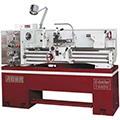
Machine tools are a vital part of many different types of shops, factories, and garages. For example, in a machine shop there will be lathes to bore holes and grind surfaces.
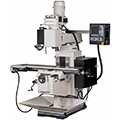
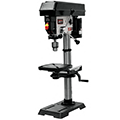
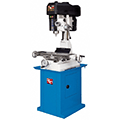
In a factory, meanwhile, there will be milling machines to create precise shapes out of a material, or "workpiece." In a garage, you might find drill presses used for everything from enlarging cylindrical holes to countersinking and counterboring.
No matter what your business is, finding the right machine tool can help you maximize efficiency and eliminate application issues. Collaborating with Penn Tool Co., can help you get the right equipment the first time.
General Machinist Tools
Machine tools are invaluable to manufacturers in many different industries because this class of equipment is as expansive as it is versatile.
These include:
1. Drilling holes in materials with precision accuracy
2. Creating molds for casting molten metals like aluminum or steel
3. Machining parts out of wood
4. Cutting metal to make parts for machines, cars, bicycles, appliances
We offer a variety of machinist tools for a range of applications.
Technical Instruments and Machine Shop Tools
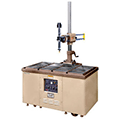
For some manufacturers, this might include specialized industrial machines for unique applications. Carbide disintegrators, for example, are used to remove broken taps, drill bits, screws, and other hardened tool-steel fragments from a workpiece. Rather than cutting or grinding, a carbide disintegrator uses electrical arc erosion to safely break down the stuck fragment without damaging the surrounding material.
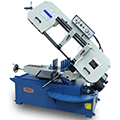
Meanwhile, our metal cold saws are also great for cutting, through both ferrous and non-ferrous materials. However, unlike regular saws, these are designed to keep the blade and the material cool.
Whatever the unique requirements of your workplace, we're sure to have the technical machine tools you need.
A Quick Guide to Machinist Tools & Power Sources
Depending on your applications, choose the right power source to help support the task.
|
Power Source
|
Common Applications
|
|
Manual
|
Simple, low-volume tasks and jobs requiring direct operator control
|
|
Electric
|
General-purpose machine shop tools such as drill presses, lathes, and mills
|
|
Pneumatic
|
Tools requiring rapid, repetitive motion powered by compressed air
|
|
Hydraulic
|
Heavy-duty applications requiring high force, such as metal forming and presses
|
Machinist Tool Brands We Carry
Penn Tool Co. carries machinist tools and machine shop tools from established manufacturers trusted by machinists, metalworkers, and fabrication shops.
1. Jet offers a broad range of woodworking and metalworking machinery, including lathes, mills, drill presses, and dust collection equipment.
2. Cleveland Steel Tool manufactures ironworkers, punches, and metal fabrication tooling used for shearing, punching, and forming metal.
3. Baileigh offers metalworking and woodworking machinery, including shears, press brakes, ironworkers, and band saws.
4. Newall specializes in digital readout (DRO) systems and measurement solutions used to improve positioning accuracy on machine tools.
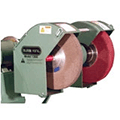
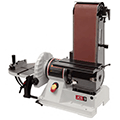
5. Kalamazoo Industries Inc. manufactures abrasive cutting, grinding, and sanding machines used for metalworking and fabrication tasks.
We carry these brands along with other trusted brands that manufacture machinist tools
Shape Up Your Shop With Machine Tools from Penn Tool Co.
Because Penn Tool Co. is pleased to carry a wide selection of machine tools for sale. Our extensive catalog empowers metalworkers and machinists to complete any project with ease.
To ensure maximal quality and enduring reliability, we sell machine shop tools from the leading brands you know and love. In fact, it's our ultimate goal to provide you with superior tools that perform and produce for many years to come.
Learn more about the mechanical workshop machine tools we offer, or find the perfect product for your operations, by reaching out to our team today.
Frequently Asked Questions About Machinist Tools & Machine Shop Tools
What are machinist tools?
Machinist tools are the instruments and machinery machinists use to measure, cut, shape, and finish metal and other materials, including both hand-held measuring instruments and powered machine shop tools.
What are machine shop tools?
Machine shop tools are the powered machinery, such as:
1. Lathes
2. Milling machines
3. Drill presses
4. Grinding machines
They form the core equipment of a working machine shop.
What is the difference between a manual and a CNC machine tool?
A manual machine tool is controlled directly by an operator, while a CNC machine tool follows programmed instructions to automate cutting, milling, or turning operations with high precision and repeatability.
How do I choose the right machine shop tool for my shop?
Consider the materials you're working with, your required precision and production volume, available power sources, workspace and safety needs, and long-term maintenance requirements.
What industries rely on machinist tools and machine shop tools?
Machine shop tools are used across manufacturing, automotive, aerospace, metalworking, and woodworking industries, as well as in general repair and fabrication shops.
What is a carbide disintegrator used for?
A carbide disintegrator is used to remove broken taps, drill bits, screws, and other hardened tool-steel fragments from a workpiece using electrical arc erosion, rather than cutting or grinding.
What is the difference between a lathe and a milling machine?
A lathe rotates the workpiece against a stationary or moving cutting tool to shape or turn cylindrical parts, while a milling machine rotates the cutting tool itself to remove material from a stationary or moving workpiece, making it better suited for:
1. Flat surfaces
2. Slots
3. Complex shapes.
What does a digital readout (DRO) do on a machine tool?
A digital readout displays precise positional measurements on a machine tool, such as a mill or lathe, helping operators track tool location and improve accuracy during machining.