The Power Struggle: Navigating the Choice Between Pneumatic and Electric Tools
The Power Struggle: Navigating the Choice Between Pneumatic and Electric Tools

Be it the sound of high-speed spindles engaging, the hiss of air lines, the controlled hum of cooling systems, and the deliberate click-clack of precision instruments~ there is a distinct rhythm to the workday in a premium machine shop. For decades, the debate over the "heart" of that shop, i.e. the tools themselves, has been a cornerstone of industrial conversation. Should your facility run on the compressed air of a pneumatic system, or are you ready to embrace the digital efficiency of high-torque electric power tools?
This isn’t just a question of "corded vs. cordless." It is a fundamental procurement decision that impacts your facility's safety, overhead costs, and overall throughput. Whether you are outfitting a new toolroom or auditing your current shop tools for efficiency, understanding the trade-offs between these two power sources is critical.
At Penn Tool Co., we believe that tools are the bridge between human intent and mechanical perfection. Today, we’ll help you determine which technology best aligns with your shop’s unique standards of precision and performance, by breaking down the battle of pneumatic vs electric tools.
The Pneumatic Stalwart: Air Power as an Industrial Language
For generations, the "air tool" has been the backbone of the North American shop. Air tools offer an inherent reliability that modern technology struggles to replicate. When you hold a pneumatic impact wrench or a die grinder, you are holding a tool that is remarkably simple in its architecture: a rotor, a motor, and a steady stream of pressurized air.
The Advantages of Air:
- Power-to-Weight Ratio: Pneumatic tools are famously lightweight. Because the "motor" is essentially a small turbine driven by air, you can fit incredible torque into a tool that won't fatigue your operator’s wrist after an eight-hour shift.
- Durability: Air tools thrive in the harshest environments. Metallic fines, coolant mist, and high-heat areas don't bother them because there are no sensitive circuit boards to fry. If an air tool gets dirty, you can often clean it out, re-lubricate, and keep working.
- Safety: In environments where sparking is a non-starter, such as shops dealing with flammable solvents or volatile gases, pneumatic tools are the gold standard. They eliminate the electrical arc risk entirely.
The Hidden Cost of Air:
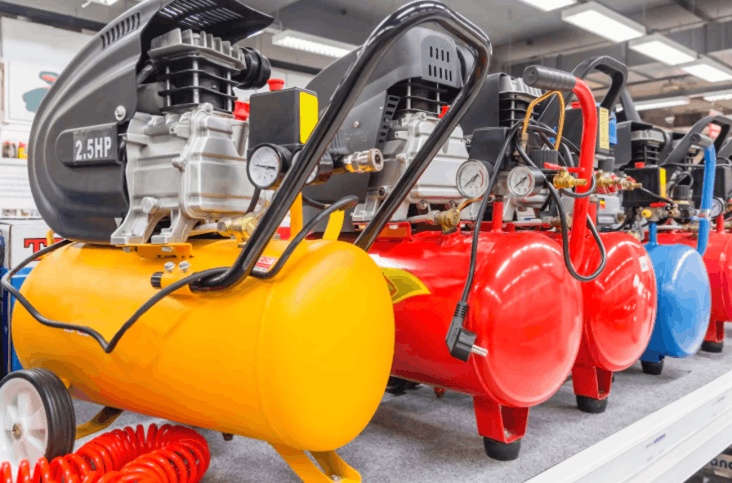
More often than not, the "cost" of air tools is the cost of the infrastructure, and not the price of the tool itself. To run a pneumatic shop, you need a high-quality compressor, a massive storage tank, a network of leak-proof piping, and a filtration system to keep moisture out of your lines. If your compressed air system is inefficient, you are "leaking" money, quite literally. Every hissing coupling is a direct drain on your electricity bill.
The Electric Evolution: Efficiency and Precision
The past decade has seen a revolution in power tools. With the advent of brushless motors and high-capacity lithium-ion batteries, electric tools are no longer just for home renovation; they are genuine, high-performance industrial tools.
The Advantages of Electricity:
- Energy Efficiency: This is the primary driver of the switch to electric. An electric tool uses energy only when the trigger is pulled. In contrast, an air compressor must run periodically just to keep the entire line pressurized, even when no one is using a tool.
- Portability and Mobility: If you are working on large-scale fabrications or need to move a tool to a different area of the facility, the electric tool is the clear winner. You don't have to drag a heavy, high-pressure hose across the floor or worry about losing air pressure at the end of a long run.
- Digital Integration: This is where the premium shop takes notice. Many modern electric torque tools are "smart." They can log data, ensure that a bolt is tightened to an exact, calibrated specification, and prevent the tool from operating if the torque value isn't met. For quality control, this is a game-changer.
The Trade-offs:
Electric tools can be heavier due to the battery or the internal circuitry. Furthermore, in an environment saturated with coolant or metallic dust, the cooling vents of an electric motor can become a point of failure, leading to overheating or shorts.
The Performance Comparison: When to Choose Which?
To make the right procurement decision, we have to look at the application. It’s not about which category is "better"; it’s about which one fits your process.
|
Feature |
Pneumatic Tools |
Electric (Cordless/Brushless) |
|
Ergonomics |
Lightweight; ideal for all-day use |
Heavier due to battery/motor |
|
Maintenance |
Low (needs regular oiling) |
Low (sealed units), but battery cycles |
|
Precision |
High; easy to modulate |
Low (sealed units), but battery cycles |
|
Environment |
Best for dirty/hazardous areas |
Best for assembly/controlled areas |
|
Initial Cost |
Low (tool price) |
High (tool + battery ecosystem) |
Scenario A: The High-Volume Assembly Line
If your facility is doing repetitive fastening where speed and data logging are vital, the electric tool with integrated torque control is the winner. The ability to verify every single connection through a software interface is an investment in quality that air tools cannot match.
Scenario B: The Rough Machining & Heavy Fabrication Shop
If your shop is characterized by heavy grinding, intense deburring, and high-heat environments, the pneumatic tool remains the champion. It will survive the conditions that would kill the electronics of a cordless drill in a week.
Safety and the "Connected" Shop
When comparing pneumatic vs electric tools, we must address the safety culture of the modern shop.
Pneumatic tools come with the risk of hose failure. A high-pressure line that breaks while under load can whip around the shop with dangerous force. It requires a culture of hose management and safety couplings.
Electric tools, conversely, require battery management. A poorly stored lithium battery is a fire risk. Furthermore, high-torque electric tools can cause "wrist snap" injuries because they deliver their maximum torque so abruptly. Modern electric tools often include "kickback control" to mitigate this, which is a significant safety advancement for your team.
The Procurement Philosophy: A Balanced Ecosystem
We often see premium shops moving toward a "hybrid" model. They utilize high-pressure, fixed-location pneumatic tools for the "heavy lifting" at the primary workbenches, while equipping their mobile technicians and assembly teams with high-end, brushless electric tools.
When you visit our catalog, consider these three questions before checking out:
-
Duty Cycle: How many hours a day is this tool running? If it's 8 hours, air might reduce operator fatigue.
-
Environment: Is the area wet, oily, or dusty? If yes, think twice about exposing an electric motor.
-
Data Requirements: Does your quality protocol require you to prove the torque was applied? If yes, you need the digital feedback of modern electric tools.
Precision is about more than just the tool; it's about the entire ecosystem of your shop. Whether it’s the steady, reliable hiss of a pneumatic grinder or the clean, intelligent hum of an electric driver, the right tool is the one that empowers your team to produce better parts, faster.
Frequently Asked Questions (FAQ)
1. Why do pneumatic tools often feel "better" in the hand than electric tools?
Pneumatic tools are significantly lighter because they don't contain heavy copper windings or lithium batteries. This reduced weight is a huge advantage for operators who use tools continuously throughout the day, as it significantly reduces muscle fatigue and improves ergonomics.
2. Are electric tools truly "smarter" than pneumatic tools?
Yes, in the modern sense. High-end electric tools now feature programmable torque settings, data logging, and pass/fail indicators. This allows shops to meet strict quality control standards for aerospace or medical components, ensuring that every bolt is tightened to the exact specification required by engineering.
3. Which tool type has a lower long-term cost of ownership?
This is a nuanced question. While pneumatic tools are cheaper to purchase, the total cost of maintaining a compressor, cleaning air lines, and paying for the electricity to compress air can be higher. Electric tools are more energy-efficient, but you must factor in the cost of replacing batteries over time.
4. Can I use electric tools in a wet or oily shop environment?
You should be cautious. Most high-quality brushless electric tools are designed to be "dust and moisture resistant," but they are not "waterproof." If your shop has heavy coolant mist, you must ensure you are buying "industrial-rated" electric tools rather than "trade-grade" consumer tools. Otherwise, pneumatic remains the safer bet.
5. How do I maintain air tools to ensure they last?
The "secret" to air tool longevity is simple: clean, dry, and oiled air. An inexpensive inline filter-regulator-lubricator (FRL) unit will prevent the moisture and rust that kills rotors. A few drops of air-tool oil before every shift will extend the life of your pneumatic tools by years.