Stop Fighting "Gummy" Aluminum: A Machinist's Guide to Beating Chip Welding
Stop Fighting "Gummy" Aluminum: A Machinist's Guide to Beating Chip Welding

If you've spent any real time on the shop floor, you already know aluminum has a split personality. On one hand, it's lightweight, forgiving, and a favorite for precision manufacturing across aerospace, automotive, and general fabrication. On the other hand, the same properties that make it so useful, its ductility and thermal conductivity, are exactly what make it a nightmare to machine cleanly.
If you've ever pulled a part off the mill and found a rough, smeared, almost "melted" looking surface, you're not imagining things. You're dealing with chip welding, more commonly known in the trade as Built-Up Edge, or BUE. And once it starts, it doesn't just make your parts look bad. It quietly eats into your tool life, your dimensional accuracy, and ultimately your bottom line.
Let's walk through what's actually happening when this occurs, why it spirals out of control so quickly, and, more importantly, the field-tested strategies that experienced machinists use to stop it before it starts.
What Is Chip Welding (Built-Up Edge), Really?
Here's the simple version: aluminum is soft, and it doesn't take much heat to make it softer still. As your cutting tool moves through the material, friction at the cutting interface generates heat. That heat causes the aluminum to soften just enough that instead of shearing away cleanly as a chip, it starts sticking, literally welding itself, to the rake face of your tool.
Once that happens, your tool is no longer doing what it's designed to do. It's supposed to act like a precision shear, cutting cleanly through the material with minimal resistance. But with a layer of gummy aluminum now stuck to its edge, it starts behaving more like a dull, dragging obstruction. It's no longer cutting. It's tearing.
And here's the part that catches a lot of people off guard: this isn't a one-time event. It's a cycle, and it feeds on itself.
The Cycle of Destruction
It typically plays out in three stages:
1. Increased friction. The moment aluminum begins to build up on the cutting edge, it effectively changes the geometry of your tool. What was a sharp, efficient edge is now a rougher, less predictable surface, and that means more friction with every pass.
2. Excessive heat. More friction generates more heat. That heat softens even more of the surrounding aluminum, which means more material sticks to the tool. It's a feedback loop, and it accelerates fast.
3. Catastrophic tool failure. Eventually, that built-up edge reaches a breaking point, sometimes literally. When it breaks off, it often doesn't do so cleanly. It can tear away the tool's coating or even chip the carbide substrate underneath, setting the stage for premature tool breakage. What started as a minor surface finish issue can end with a broken tool and a scrapped part.
The good news is that this entire cycle is preventable. It comes down to three core principles that, once you understand them, will change how you approach every aluminum job that comes across your machine.
The 3 Pillars of Successful Aluminum Machining
1. Optimize Your Cutting Geometry
The single biggest mistake shops make with aluminum is reaching for general-purpose tooling, the same end mills they'd grab for steel or stainless. Aluminum simply doesn't behave the same way, and it demands tooling that's built with its specific properties in mind.
High-positive rake angles should be at the top of your checklist. A high-positive rake essentially lets the tool slice through the material rather than push against it. Less force means less friction, and less friction means less of the heat buildup that kicks off the whole BUE cycle in the first place.
Flute count matters more than you'd think. If you're used to reaching for a 4-flute end mill because that's your go-to for steel, it's time to rethink that habit for aluminum. Two- or three-flute end mills are the standard here for a reason: fewer flutes means larger chip gullets, and larger gullets mean chips have room to evacuate quickly. The faster a chip leaves the cutting zone, the less time it has to sit against a hot tool and weld itself in place.
Don't overlook the finish on the tool itself. A mirror-polished carbide surface makes a real difference. Aluminum has a tendency to "grab" onto rougher surfaces, so a smooth, polished finish reduces the odds of the material adhering in the first place.
2. Adopt a "Fast and Light" Mindset
This is where a lot of machinists' instincts actually work against them. With steel, you often think in terms of slow and controlled. With aluminum, the opposite tends to be true. Speed is genuinely your friend.
Push your Surface Feet Per Minute (SFM) higher. Running at higher speeds shortens the amount of time available for heat to transfer from the cutting zone into the tool itself. Less time in contact at high friction means less opportunity for that heat to build to the point of softening the material.
Keep your chip load aggressive, not timid. This one trips people up. It feels intuitive to back off and go lighter when you're worried about a "gummy" material, but a chip load that's too light actually makes things worse. Instead of shearing cleanly, a light chip load causes the tool to rub against the material, and rubbing generates heat almost instantly. A properly aggressive chip load ensures the tool is biting into the aluminum and shearing it away, rather than dragging across the surface.
3. Get Serious About Your Coolant Strategy
Coolant does more than just keep things cool. In aluminum machining specifically, it's doing double duty as both a lubricant and a cleanup crew.
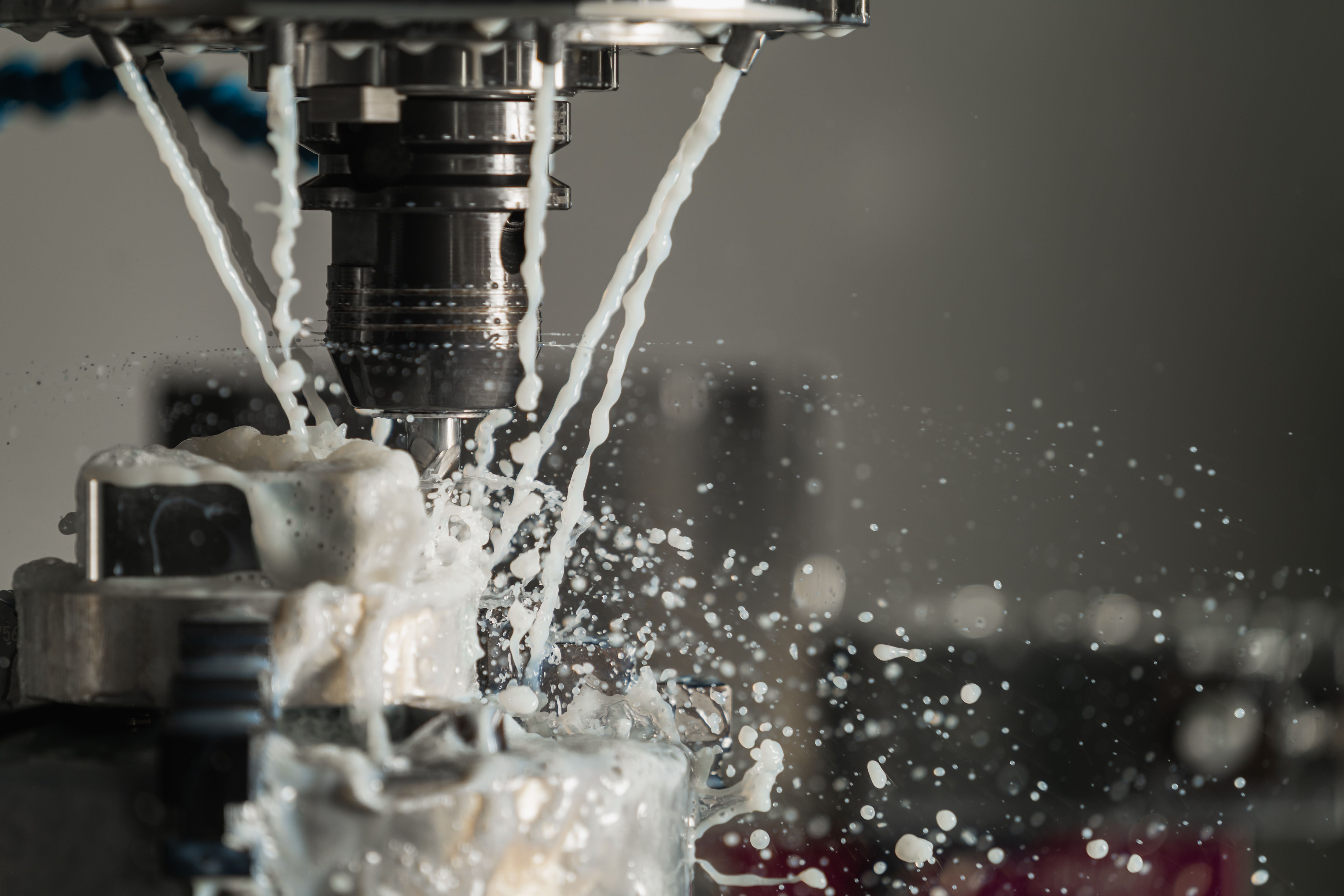
High-pressure flushing is non-negotiable. Whether it's high-pressure flood coolant or a high-velocity air blast, the goal is the same: get chips out of the cutting zone immediately, before they have any chance to linger against a hot tool and start welding.
Be intentional about coating selection. This is an area where well-meaning shops often shoot themselves in the foot. Coatings like TiAlN are excellent for steel, but they were never designed with aluminum in mind. In fact, they tend to have a high affinity for it, which is the last thing you want. Instead, look for uncoated, polished carbide, or coatings specifically engineered for non-ferrous materials. The goal is minimizing the coefficient of friction between the tool and the aluminum, and the wrong coating can work directly against that goal.
Frequently Asked Questions
Q: Why does my aluminum part have a rough, smeared surface finish?
That rough or smeared look is a textbook sign of chip welding, or Built-Up Edge. Once aluminum melts and sticks to your cutting edge, the tool stops shearing the material cleanly and starts tearing it instead. The fix comes down to the fundamentals: use a high-positive rake geometry, keep your chip load aggressive enough to carry heat away from the cut, and lean on high-pressure coolant to flush chips out before they can weld themselves in place.
Q: Can I just use the same end mills for steel and aluminum?
It's tempting, one less tool change, one less thing to think about, but it's not a good idea. Tooling built for steel usually has different flute counts, helix angles, and coatings (TiAlN being a common one) that can actually make friction worse when you're cutting aluminum. For aluminum work, stick with 2- or 3-flute end mills that are polished, uncoated, or coated specifically for non-ferrous materials. It's a small adjustment that saves a lot of headaches.
Q: Does running faster actually help with "gummy" materials like aluminum?
Yes, and it's one of those things that goes against instinct until you understand the mechanics. "Fast and light" is genuinely the winning approach with aluminum. Higher Surface Feet Per Minute reduces the window of time heat has to transfer into your tool, and a proper chip load keeps the tool biting into the material instead of rubbing against it. Rubbing is really the root cause of most heat buildup, and heat buildup is what leads straight to chip welding.
Elevate Your Shop's Performance with Penn Tool Co. Inc.
At the end of the day, avoiding chip welding isn't about luck. It's about having the right tooling and the right strategy dialed in before the job starts. The difference between a smooth, profitable production run and costly downtime often comes down to details like these.
At Penn Tool Co. Inc., we specialize in high-performance tooling curated specifically for demanding machining applications like aluminum. If you're not sure where to start, or you're troubleshooting an ongoing chip welding issue, we're here to help.
Explore our premium collection of aluminum-specific cutting tools, or reach out directly to our technical team for a personalized recommendation on the right speed, feed, and tool selection for your next job.